How Long Does Therapy Take? Realistic Timelines & Signs

|

10

min read

|

Tanvi

The Ever-Evolving Cybersecurity Landscape

You’re Not Alone

A 29-year-old consultant has just finished her third therapy session and closed her laptop.

Over the past few weeks, she has started talking about things she usually keeps to herself. Work stress that follows her home at night. Relationship patterns she keeps repeating. The constant feeling of being mentally “on” even when she is exhausted.

She’s trying to stay consistent with therapy, even when meetings run late and the week already feels draining. But after the session ends, one thought still lingers:

“How long is this actually supposed to take before I start feeling better?”

For most people, therapy starts helping gradually rather than all at once. Some concerns improve within a few months, while others need longer-term work.

But therapy timelines are rarely just about numbers.

Working through a recent breakup is different from working through years of anxiety. Learning to manage burnout is different from slowly changing emotional patterns that have shaped someone’s relationships for decades.

And understanding that difference makes therapy timelines easier to understand.

How Long Does Therapy Usually Take to Work?

Most people begin noticing meaningful progress somewhere between 8 and 20 therapy sessions, although the timeline can vary depending on what they’re struggling with, how long it has been affecting them, and how consistently therapy happens.

According to the American Psychological Association:

  • Around 75% of people who start psychotherapy see some benefit from it

  • Around 15–20 sessions are often needed for roughly half of clients to show meaningful recovery

  • Many structured therapies, including Cognitive Behavioral Therapy, often work within 12–16 sessions for specific concerns

Those numbers can feel reassuring, but they can also feel confusing if someone expected therapy to create immediate relief.

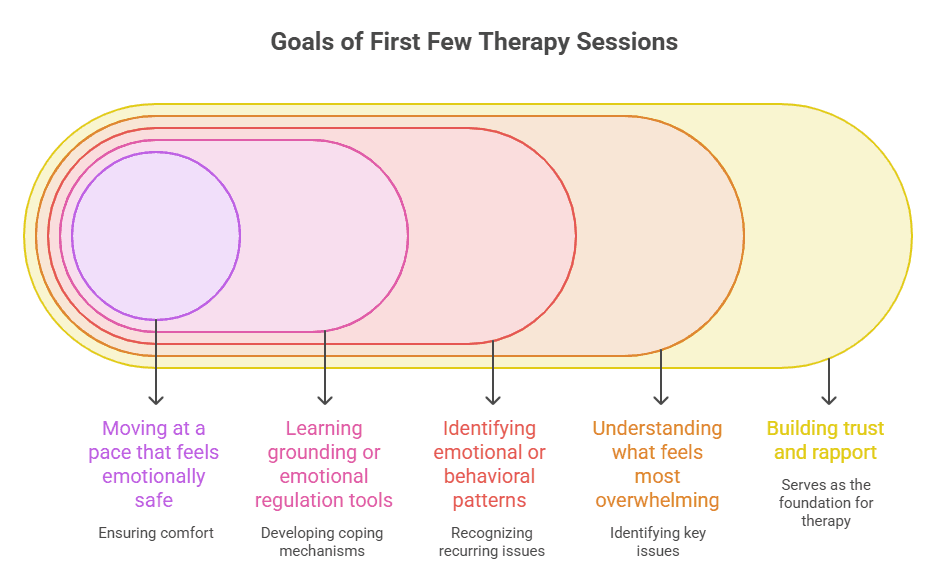
The first few sessions are often less about immediately “fixing” symptoms and more about building the foundation for therapy.

That usually includes:

  • Building trust and rapport with the therapist,

  • Understanding what feels most overwhelming right now,

  • Identifying emotional or behavioral patterns,

  • Learning grounding or emotional regulation tools if emotions feel intense,

  • And moving at a pace that feels emotionally safe before going deeper.
This matters especially in trauma work or chronic anxiety. Going too deep too quickly can sometimes leave people feeling emotionally flooded rather than supported.

Early therapy is often quieter than people expect. Progress may show up first in small ways: sleeping slightly better, reacting less intensely, pausing before spiralling, or feeling more aware of patterns that previously felt automatic.

Research by Nathan B. Hansen, Michael Lambert, and Evan Forman found that many clients begin showing meaningful improvement around 13–18 sessions. But in real-world care, many people leave therapy before even reaching five sessions.

Sometimes therapy does not fail because it is ineffective.

Sometimes it ends before enough therapeutic work has had time to build.

For many urban professionals in India, that experience feels familiar.

Therapy often slows down not because motivation disappears, but because life keeps interrupting the process:

  • Weekly sessions begin to feel expensive,

  • Work schedules constantly shift,

  • Therapy may still be kept private at home, which can make scheduling, consistency, and emotional support more difficult,

  • Or emotional vulnerability itself starts feeling tiring after already exhausting workdays.

There is also a more psychological layer to this.

Therapy can feel emotionally difficult and financially significant at the same time. And unlike medication or a physical treatment, progress is not always immediately visible.

People naturally start wondering:

“Am I actually getting value from this?”

That uncertainty is extremely common, especially in the early stages of therapy where changes are often subtle before they become obvious.

➡️ If your work, sleep, relationships, or sense of self have quietly become harder to manage lately, this experience is probably more common than it feels.

Once people understand the average timelines, the next question becomes more personal:

Why does therapy help one person relatively quickly, while someone else spends months or years working through similar struggles?

Why Does Therapy Take Longer for Some People Than Others?

Therapy timelines usually depend on a few important things:

  • What someone is working through,

  • How long it has been affecting them,

  • How often therapy happens,

  • What happens between sessions,

  • And whether the therapist feels like the right fit.

One of the biggest differences comes from the type of emotional pain someone is carrying into therapy.

Research by Hansen and colleagues found that recovery timelines often look very different depending on the complexity of the concern itself.
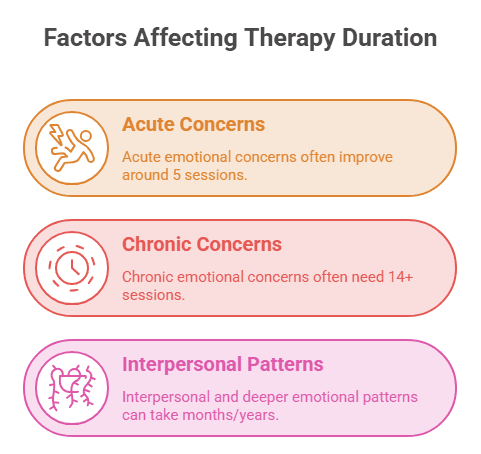
Acute emotional concerns

Often improve around 5 sessions

Examples include:

  • Panic after a stressful event,

  • Breakup distress,

  • Adjustment difficulties,

  • Short-term work stress.

These concerns often improve faster because therapy is helping someone stabilize and cope with a more immediate problem.

Chronic emotional concerns

Often need 14+ sessions

Examples include:

  • Long-term anxiety,

  • Depression lasting years,

  • Emotional neglect,

  • Attachment wounds.

Interpersonal and deeper emotional patterns

Can take significantly longer, sometimes extending over  several years when therapy is focused on deeply rooted emotional and relational patterns.

Examples include:

  • Repeated unhealthy relationships,

  • Chronic people-pleasing,

  • Fear of abandonment,

  • Emotional dependency,

  • Long-standing patterns in relationships, self-worth, emotional regulation, or attachment

In these situations, therapy is usually doing more than symptom management. It may involve slowly changing ways of relating, coping, protecting oneself emotionally, responding to stress, or understanding patterns that developed over many years through family relationships and life experiences.

How often therapy happens also matters more than many people realise.

Research by Bea Tiemens et al. found that people who attended therapy more consistently during the early months often had stronger recovery outcomes.

Another study found that many therapists actually wanted to meet clients more frequently during the early stages of therapy, but affordability and life circumstances often made that difficult.

That feels especially relevant in India.

➡️ If weekly therapy does not feel financially realistic right now, that does not mean therapy cannot help.

Weekly sessions often build momentum faster. Fortnightly sessions can still work well. Monthly sessions usually need stronger reflection, journaling, or emotional work between sessions to maintain continuity.

Life outside therapy also shapes the timeline.

Progress often slows during:

  • Burnout,

  • Poor sleep,

  • Caregiving stress,

  • Financial pressure,

  • Family conflict,

  • Or major life transitions.

Sometimes therapy itself is going well, but life outside the sessions is simply overwhelming.

Therapist fit matters too.

Research shows that the relationship between a therapist and client is one of the strongest predictors of therapy outcomes.

Feeling emotionally safe with a therapist changes how honestly someone opens up, how understood they feel, and whether therapy starts feeling supportive rather than emotionally draining.

For many urban professionals, good therapist fit may include:

  • Language comfort,

  • Understanding work pressure,

  • Familiarity with family expectations,

  • Comfort discussing relationships or identity,

  • And feeling less judged while talking about difficult experiences.

That is also part of why personalised matching matters on platforms like Elfina Health.

Once people understand what shapes therapy timelines, the next question becomes much more specific:

How long does therapy usually take for anxiety, burnout, depression, or trauma?

How Long Does Therapy Usually Take for Anxiety, Depression, Burnout, or Trauma?

The answer depends partly on the concern itself.

Some struggles respond relatively quickly to structured support and coping tools. Others involve deeper emotional patterns, longstanding stress, or trauma that naturally take longer to work through.
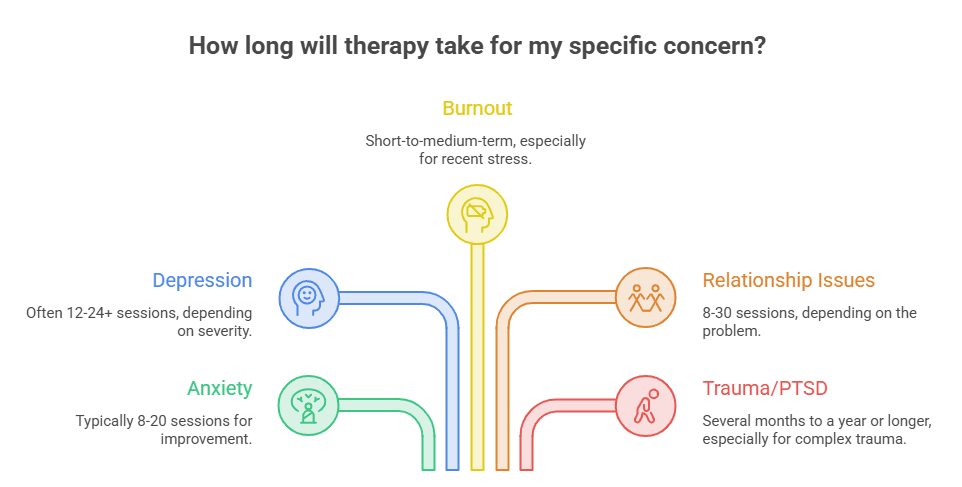
The important thing is that a longer timeline does not automatically mean therapy is “not working”. Often, it simply means the work is more layered.

Anxiety

Many anxiety-related concerns begin improving within 8–20 sessions, especially when therapy is structured and consistent.

Hasnen’s research and psychotherapy benchmarks from the American Psychological Association both suggest that anxiety often responds well to focused therapeutic approaches.

But “anxiety” can mean very different things in practice.

For example:

  • Panic attacks linked to a recent stressful event may improve relatively quickly,

  • While chronic overthinking, perfectionism, or generalized anxiety often take longer because the patterns are more deeply woven into daily life.

Some people also discover that anxiety is not only about stress management.

Therapy may gradually uncover:

  • Fear of disappointing people,

  • Difficulty feeling emotionally safe,

  • Chronic self-criticism,

  • Or years of functioning in survival mode without fully realising it.

That is part of why therapy timelines can vary even within the same diagnosis.

If you’re not sure whether what you’re experiencing is anxiety, take Elfina’s anxiety quiz to better understand your symptoms.

Depression

Depression often takes 12–24+ sessions, depending on symptom severity, emotional history, recurrence, and how long daily functioning has been affected.

For some people, therapy focuses mainly on stabilising mood, rebuilding routine, and reducing hopelessness.

For others, the work becomes deeper and more relational. Sessions may begin exploring:

  • Emotional numbness,

  • Unresolved grief,

  • Burnout,

  • Shame,

  • Loneliness,

  • Or patterns of self-worth that have existed for years.

Depression can also affect motivation itself, which makes therapy feel emotionally heavy at times. People often expect themselves to “do therapy well” while already struggling to get through ordinary days.

In some situations, additional psychiatric support or medication may also become part of treatment, especially when symptoms are severe, persistent, or affecting sleep, appetite, concentration, or safety.

Burnout and Work Stress

Burnout often falls into the short-to-medium-term therapy range, especially when the stress is recent and strongly connected to work pressure.

But burnout is rarely just about being “too busy”.

For many working professionals, therapy gradually reveals patterns underneath the exhaustion:

  • Productivity becoming self-worth,

  • Guilt around rest,

  • Difficulty setting boundaries,

  • Chronic pressure to perform,

  • Or feeling emotionally disconnected from life outside work.

Some common experiences include:

  • Sunday anxiety before the work week starts,

  • Slack or email notifications creating dread,

  • Feeling exhausted even after resting,

  • Becoming emotionally numb or irritable,

  • Or functioning well professionally while quietly struggling internally.

If burnout has been building for years, recovery may also take longer than expected because the nervous system has often been under chronic stress for a long time.

And sometimes, what initially looks like burnout may overlap with anxiety, depression, or unresolved emotional stress underneath.

Relationship Issues

Relationship-focused therapy often takes anywhere from 8–30 sessions, depending on the nature of the issue.

Some people come to therapy because of a recent breakup or conflict. Others begin noticing repetitive emotional patterns that keep appearing across relationships.

Therapy may explore things like:

  • Fear of abandonment,

  • Emotional avoidance,

  • People-pleasing,

  • Difficulty trusting others,

  • Conflict patterns,

  • Or attachment wounds that formed much earlier in life.

Relationship work can feel slower because it often involves changing automatic emotional reactions, not just understanding them intellectually.

Someone may fully recognise a pattern in therapy and still need time learning how to respond differently in real situations.

That part takes practice, emotional safety, and repetition.

Trauma / PTSD

Trauma-focused therapy often takes several months to a year or longer, especially when the trauma is:

For some people, trauma continues showing up through:

  • Nightmares,

  • Panic,

  • Hypervigilance,

  • Emotional shutdown,

  • Flashbacks,

  • Strong reactions to triggers that may not always seem obvious at first,,

  • Or constantly feeling unsafe even in ordinary situations.

According to the American Psychological Association, longer trauma therapy does not mean therapy is failing.

In many cases, therapy moves more slowly because safety and emotional regulation need to be built before deeper processing can happen.

This is one reason trauma therapy often focuses first on:

  • Grounding,

  • Stabilisation,

  • Emotional regulation,

  • And creating enough emotional safety before revisiting painful experiences directly.

How much trauma affects daily life often shapes how slowly or carefully therapy needs to move.

And for many people, one of the hardest parts is realising that trauma recovery is not only about remembering what happened. It is also about rebuilding a sense of safety inside the body, relationships, and everyday life.

Why Doesn’t Therapy Progress Feel Linear?
One of the most confusing parts of therapy is that progress rarely happens in a straight line.

People often expect recovery to feel steady and obvious: fewer symptoms, more confidence, less emotional pain week after week.

Real therapy usually feels more uneven than that.

Research by Daniel Naumzik and colleagues found that recovery often moves through changing phases rather than one smooth upward curve.

That tends to match people’s real experiences in therapy.

Some weeks feel lighter and hopeful. Other weeks feel emotionally tiring, confusing, or strangely stagnant. Sometimes people only realise they are improving when they look back after several months.

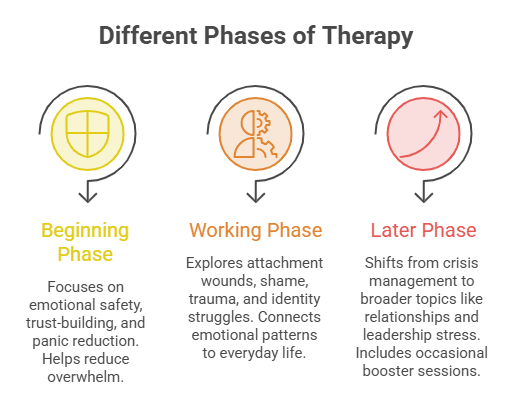
Therapy also tends to unfold in phases.

Beginning phase: Safety and stabilisation

Early sessions often focus on:

  • Emotional safety,

  • Trust-building,

  • Panic reduction,

  • Sleep support,

  • Grounding,

  • And helping someone feel less overwhelmed day to day.

This stage may not feel dramatic, but it creates the foundation for deeper work later.

Working phase: Patterns and deeper emotional work

This is often where therapy starts feeling slower or emotionally heavier.

Sessions may begin exploring:

  • Attachment wounds,

  • Shame,

  • Trauma,

  • Grief,

  • Identity struggles,

  • Or long-standing emotional patterns.

This phase can feel uncomfortable because people are no longer only coping with symptoms. They are beginning to understand the emotional systems underneath them.

It is also common for people to briefly feel worse before feeling better here, especially when difficult emotions or memories begin surfacing more honestly.

This is also where people begin connecting emotional patterns to everyday life. Someone may realise they repeatedly choose unavailable partners, avoid conflict in relationships, or ignore their own needs without fully understanding why.

Later phase: Maintenance, and continued growth

For many people, therapy eventually shifts from crisis management into something broader.

Sessions may focus on:

  • Relationships,

  • Leadership stress,

  • Parenting,

  • Marriage,

  • Grief,

  • Boundaries,

  • Or navigating new life transitions.

Some people continue therapy during this phase through occasional “booster sessions” rather than weekly support.

And importantly, staying in therapy longer does not automatically mean someone is severely unwell.

Sometimes it simply means therapy has become a space for continued growth, reflection, and emotional maintenance rather than only symptom relief.

Once people understand that therapy progress is often uneven, the next question becomes easier to ask:

How do you actually know whether therapy is working?

How Do You Know Therapy Is Actually Working?

One reason people leave therapy early is because they expect progress to feel dramatic.

In reality, progress often shows up in everyday life before it shows up emotionally.

According to the American Psychological Association, change in therapy is often first visible in behavior, reactions, and coping patterns rather than immediate happiness or emotional relief.

That can make progress easy to miss in the beginning.

People sometimes expect complete confidence, zero anxiety, or major breakthroughs. Instead, early progress may look more like:

  • Pausing before reacting impulsively,

  • Recovering faster after stressful days,

  • Noticing triggers sooner,

  • Feeling slightly less emotionally drained,

  • Or being able to sit with emotions without immediately shutting down.

Some people also notice more subtle internal shifts:

  • Situations feel different emotionally,

  • Coping tools start happening more naturally,

  • Relationships feel less reactive,

  • Or old habits become easier to catch in real time.

For example, someone who previously spiralled for two days after criticism may now recover in a few hours. Someone who always avoided difficult conversations may finally speak honestly without panicking afterward.

These changes can feel small while they are happening, but over time they often signal meaningful progress.

Progress in therapy is often cumulative. Someone who starts speaking more assertively may notice that difficult conversations go better than expected. Someone who sets a boundary may realise they are not rejected for doing so. These experiences gradually build confidence, making it easier to keep practicing new behaviors.

Over time, those small moments can begin changing how a person sees themselves, their relationships, and what they believe they are capable of handling.

Therapy also changes self-awareness before it changes behavior completely.

A person may still repeat old patterns for some time, but now they recognise them while they are happening. That awareness itself is often part of the work.

And importantly, progress does not always feel comfortable.

Sometimes therapy is working precisely because someone is becoming more emotionally honest, confronting painful patterns, grieving things they previously avoided, or learning healthier behaviors that initially feel unfamiliar.

That is very different from therapy feeling unsafe, invalidating, or emotionally harmful.

Which naturally leads to another important question:

How long should you continue therapy before deciding whether it’s actually helping?

How Many Sessions Should You Give Therapy Before Deciding If It’s Working?

Unless therapy feels unsafe or deeply misaligned, most people benefit from giving therapy at least 6–8 consistent sessions before deciding whether it is helping.

This stage is important because it is also where many people begin questioning therapy the most.

The initial sessions are over. The novelty fades. Therapy may start feeling emotionally harder, slower, or less immediately reassuring than expected.

Research suggests that many therapy dropouts happen during this middle stage, not necessarily because therapy has stopped helping, but because:

  • Progress feels less obvious than expected,

  • Difficult emotions begin surfacing,

  • Goals still feel unclear,

  • The therapist-client relationship needs more time to strengthen,

  • Or early improvement creates the feeling that therapy is no longer necessary.

External pressures matter too: work schedules change, therapy starts feeling expensive, motivation fluctuates, or emotional exhaustion makes consistency harder.

This is also the stage where transparent conversations with the therapist become especially important.

Instead of silently wondering whether therapy is “worth it”, it often helps to discuss:

  • What progress realistically looks like,

  • Whether goals still feel relevant,

  • What feels difficult about therapy,

  • And how both therapist and client want to track improvement moving forward.

By session 6–8, some helpful reflection questions may include:

  • Are my goals becoming clearer?

  • Do I feel emotionally safer here?

  • Am I noticing even small changes outside therapy?

  • Have I spoken honestly about what feels helpful or unhelpful?

  • Is this discomfort...or is this genuinely the wrong fit?

There is an important difference between therapy feeling emotionally challenging, and therapy consistently feeling unsafe, dismissive, or disconnected.

Good therapy is not always comfortable.

But people should still feel respected, emotionally safe, and able to talk openly about concerns within the therapeutic relationship.

Also Read:

What’s the Difference Between Short-Term and Long-Term Therapy?
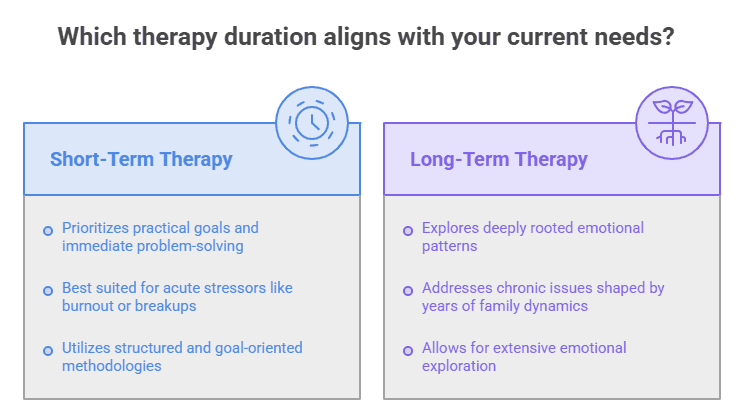
Not all therapy is designed to last the same amount of time.

Some therapy focuses on helping someone through a specific issue or life transition. Other forms of therapy involve deeper long-term emotional work that naturally takes more time.

Both approaches can be valuable.

Short-term therapy

Short-term therapy is usually more focused, structured, and goal-oriented.

It may work well for concerns like:

  • Burnout,

  • Panic attacks,

  • Adjustment stress,

  • Breakups,

  • Workplace anxiety,

  • Or a specific life transition.

The Helsinki Psychotherapy Study followed 326 patients over three years and found that short-term therapy often improved work functioning faster in the earlier stages of treatment.

That feels especially relevant for working professionals who may be looking for support with immediate distress or day-to-day functioning.

Some approaches, like Solution-Focused Brief Therapy, are intentionally designed to be shorter and more targeted. The focus is usually on practical goals, coping strategies, and immediate problem-solving rather than long-term emotional exploration.

Long-term therapy

Long-term therapy usually becomes relevant when someone is working through more deeply rooted emotional patterns.

The same Helsinki study found that longer-term therapy often produced stronger gains in emotional functioning and work ability over time.

This kind of therapy may involve:

Another research found that people working through deeper emotional and personality patterns sometimes remained in therapy for a median of 110 sessions, with some needing less and others considerably more.

At first glance, that number can sound intimidating. But these were not people seeking support for a recent stressful event or a difficult month at work. Many were working through emotional patterns that had shaped their lives for years. Viewed through that lens, a longer therapy journey often makes much more sense.

Many of the patterns people bring into therapy did not begin recently.

They may have been shaped over years of family dynamics, chronic stress, emotional invalidation, survival coping mechanisms, or repeated relationship experiences.

When therapy takes longer, it does not automatically mean progress is slow.

Sometimes it means the work has moved beyond immediate symptom relief and into changing emotional patterns that have existed for a long time.

And for many people, understanding that distinction changes how they view the therapy process entirely.

Conclusion: Don’t Be Intimidated By It

Therapy timelines can vary widely, but that does not mean the process is random or unpredictable.

The kind of concern someone is working through, how long it has been affecting them, how safe they feel with their therapist, and how consistently therapy happens all shape the pace of progress.

Some people come to therapy needing support through a difficult phase of life. Others are working through emotional patterns that have existed for years. Both experiences are valid, and both deserve care that feels thoughtful, personalised, and emotionally safe.

What matters most is not trying to “finish therapy” as quickly as possible. It is understanding what kind of support you need, what progress realistically looks like, and whether the therapeutic relationship feels supportive enough for honest work to happen over time.

At Elfina Health, therapy is designed around that idea. Instead of a one-size-fits-all approach, the focus is on thoughtful therapist matching, flexible online support, and helping people find a therapist who understands not just their symptoms, but the context of their life as well.

Frequently Asked Questions

Is one therapy session enough?

One therapy session can still be meaningful.

Some people leave a first session feeling relieved, emotionally lighter, or clearer about what they are experiencing. A good session may help someone feel understood, validated, or less alone with what they are carrying.

But for most concerns, lasting emotional change usually needs consistency over time.

Therapy is often less about a single breakthrough and more about gradually building insight, emotional safety, healthier coping patterns, and different ways of responding to stress or relationships.

That said, even one session can sometimes become an important starting point.

Why do I feel worse after therapy sometimes?

This is more common than many people expect.

Therapy can bring up emotions, memories, or patterns that someone has spent a long time avoiding, suppressing, or pushing through. After certain sessions, people may temporarily feel emotionally tired, vulnerable, tearful, or mentally overwhelmed.

That does not automatically mean therapy is going badly.

In many cases, it means difficult emotions are finally being processed more honestly.

At the same time, therapy should still feel emotionally safe overall. Feeling challenged is different from consistently feeling judged, emotionally unsafe, or destabilised. If sessions regularly feel overwhelming, it is important to discuss that openly with the therapist.

How often should I go to therapy?

For many people, weekly therapy works best in the beginning because it helps build momentum, trust, and continuity.

Fortnightly therapy can also work well, especially when someone has financial, work, or caregiving constraints. Monthly therapy is usually more helpful once stability has already been built or when therapy has shifted into maintenance and reflection.

The “right” frequency depends on:

  • Symptom severity,

  • Emotional support outside therapy,

  • Practical constraints,

  • And the kind of goals someone is working toward.

Consistency usually matters more than intensity.

Does online therapy work as well as in-person therapy?

For many concerns, yes.

Research has found that online therapy can be highly effective for issues like anxiety, depression, stress, burnout, and relationship difficulties, especially when the therapeutic relationship is strong.

Many people also find online therapy easier to continue consistently because:

  • Travel time is removed,

  • Sessions fit more easily into work schedules,

  • And being in a familiar environment sometimes makes opening up feel easier.

What matters most is usually not whether therapy happens online or offline, but whether the person feels emotionally safe, understood, and able to engage honestly in the process.

Why is my therapy taking longer than my friend’s?

Therapy timelines are highly individual.

Two people may both have anxiety or burnout but still need very different kinds of support depending on:

  • Emotional history,

  • Trauma exposure,

  • Personality patterns,

  • Coping style,

  • Current stress,

  • And how long the issue has been affecting daily life.

Some people are mainly working through a recent situation. Others are gradually unpacking emotional patterns that developed over many years.

Longer therapy does not automatically mean someone is “worse”. Often, it simply means the work is deeper or more layered.

Is long-term therapy normal?

Yes, for many people it is.

Some therapy is designed to be short-term and focused around a specific concern. But long-term therapy can be very valuable when someone is working through chronic relational patterns, attachment wounds, trauma, longstanding anxiety or depression, or personality-related difficulties.

Research has shown that deeper emotional and personality-focused work sometimes continues for much longer periods, especially when someone is trying to create lasting change rather than only immediate symptom relief.

Long-term therapy is not automatically a sign that someone is “stuck”. Sometimes it reflects the depth of the work being done.

How do I know if I should switch therapists?

A therapist does not need to be perfect for therapy to work well.

But over time, most people should feel emotionally safe, respected, heard, and able to speak honestly in sessions.

It is also normal for therapy to feel uncomfortable at times. Challenging conversations, difficult emotions, or honest feedback do not automatically mean the therapist is a poor fit.

But it may be worth reconsidering the fit if someone consistently feels:

  • Judged,

  • Dismissed,

  • Emotionally unsafe,

  • Misunderstood,

  • Or unable to openly discuss concerns within therapy itself.

Sometimes a different therapeutic style or personality fit genuinely makes a big difference.

Can I pause therapy and come back later?

Absolutely.

Many people move in and out of therapy during different phases of life. Some attend weekly during a difficult period, take a break when things feel more stable, and return months or years later for a few sessions when a new challenge arises or when they want support navigating a different stage of life.

For many people, it becomes a form of support they return to when life feels heavier or when they want space to reflect more intentionally again.

References

[1] Hansen, N.B., Lambert, M.J. and Forman, E.M. (2002), The Psychotherapy Dose-Response Effect and Its Implications for Treatment Delivery Services. Clinical Psychology: Science and Practice, 9: 329-343. https://doi.org/10.1093/clipsy.9.3.329

[2] Tiemens, B., Kloos, M., Spijker, J. et al. Lower versus higher frequency of sessions in starting outpatient mental health care and the risk of a chronic course; a naturalistic cohort study. BMC Psychiatry 19, 228 (2019). https://doi.org/10.1186/s12888-019-2214-4

[3] Keane, I., & Smout, M. F. (2025). Session frequency in routine psychology practice and perspectives on session scheduling: a mixed-methods study of clinician attitudes and practices. Australian Psychologist, 60(2), 99–111. https://doi.org/10.1080/00050067.2024.2415066

[4] Ardito, R. B., & Rabellino, D. (2011). Therapeutic alliance and outcome of psychotherapy: historical excursus, measurements, and prospects for research. Frontiers in psychology, 2, 270. https://doi.org/10.3389/fpsyg.2011.00270

[5] Christof Naumzik, Stefan Feuerriegel, Anne Molgaard Nielsen, Data-driven dynamic treatment planning for chronic diseases, European Journal of Operational Research, Volume 305, Issue 2, 2023, Pages 853-867, ISSN 0377-2217, https://doi.org/10.1016/j.ejor.2022.06.016.

[6] Kullgard, N., Holmqvist, R., & Andersson, G. (2022). Premature Dropout From Psychotherapy: Prevalence, Perceived Reasons and Consequences as Rated by Clinicians. Clinical psychology in Europe, 4(2), e6695. https://doi.org/10.32872/cpe.6695

[7] Paul Knekt, Olavi Lindfors, Maarit A. Laaksonen, Raimo Raitasalo, Peija Haaramo, Aila Järvikoski, Effectiveness of short-term and long-term psychotherapy on work ability and functional capacity — A randomized clinical trial on depressive and anxiety disorders, Journal of Affective Disorders, Volume 107, Issues 1–3, 2008, Pages 95-106, ISSN 0165-0327, https://doi.org/10.1016/j.jad.2007.08.005.

[8] Perry, J. C., Bond, M., & Roy, C. (2007). Predictors of treatment duration and retention in a study of long-term dynamic psychotherapy: childhood adversity, adult personality, and diagnosis. Journal of psychiatric practice, 13(4), 221–232. https://doi.org/10.1097/01.pra.0000281482.11946.fc

How Long Does Therapy Take? Realistic Timelines & Signs

|

10

min read

|

Tanvi

The Ever-Evolving Cybersecurity Landscape

You’re Not Alone

A 29-year-old consultant has just finished her third therapy session and closed her laptop.

Over the past few weeks, she has started talking about things she usually keeps to herself. Work stress that follows her home at night. Relationship patterns she keeps repeating. The constant feeling of being mentally “on” even when she is exhausted.

She’s trying to stay consistent with therapy, even when meetings run late and the week already feels draining. But after the session ends, one thought still lingers:

“How long is this actually supposed to take before I start feeling better?”

For most people, therapy starts helping gradually rather than all at once. Some concerns improve within a few months, while others need longer-term work.

But therapy timelines are rarely just about numbers.

Working through a recent breakup is different from working through years of anxiety. Learning to manage burnout is different from slowly changing emotional patterns that have shaped someone’s relationships for decades.

And understanding that difference makes therapy timelines easier to understand.

How Long Does Therapy Usually Take to Work?

Most people begin noticing meaningful progress somewhere between 8 and 20 therapy sessions, although the timeline can vary depending on what they’re struggling with, how long it has been affecting them, and how consistently therapy happens.

According to the American Psychological Association:

  • Around 75% of people who start psychotherapy see some benefit from it

  • Around 15–20 sessions are often needed for roughly half of clients to show meaningful recovery

  • Many structured therapies, including Cognitive Behavioral Therapy, often work within 12–16 sessions for specific concerns

Those numbers can feel reassuring, but they can also feel confusing if someone expected therapy to create immediate relief.

The first few sessions are often less about immediately “fixing” symptoms and more about building the foundation for therapy.

That usually includes:

  • Building trust and rapport with the therapist,

  • Understanding what feels most overwhelming right now,

  • Identifying emotional or behavioral patterns,

  • Learning grounding or emotional regulation tools if emotions feel intense,

  • And moving at a pace that feels emotionally safe before going deeper.

This matters especially in trauma work or chronic anxiety. Going too deep too quickly can sometimes leave people feeling emotionally flooded rather than supported.

Early therapy is often quieter than people expect. Progress may show up first in small ways: sleeping slightly better, reacting less intensely, pausing before spiralling, or feeling more aware of patterns that previously felt automatic.

Research by Nathan B. Hansen, Michael Lambert, and Evan Forman found that many clients begin showing meaningful improvement around 13–18 sessions. But in real-world care, many people leave therapy before even reaching five sessions.

Sometimes therapy does not fail because it is ineffective.

Sometimes it ends before enough therapeutic work has had time to build.

For many urban professionals in India, that experience feels familiar.

Therapy often slows down not because motivation disappears, but because life keeps interrupting the process:

  • Weekly sessions begin to feel expensive,

  • Work schedules constantly shift,

  • Therapy may still be kept private at home, which can make scheduling, consistency, and emotional support more difficult,

  • Or emotional vulnerability itself starts feeling tiring after already exhausting workdays.

There is also a more psychological layer to this.

Therapy can feel emotionally difficult and financially significant at the same time. And unlike medication or a physical treatment, progress is not always immediately visible.

People naturally start wondering:

“Am I actually getting value from this?”

That uncertainty is extremely common, especially in the early stages of therapy where changes are often subtle before they become obvious.

➡️ If your work, sleep, relationships, or sense of self have quietly become harder to manage lately, this experience is probably more common than it feels.

Once people understand the average timelines, the next question becomes more personal:

Why does therapy help one person relatively quickly, while someone else spends months or years working through similar struggles?

Why Does Therapy Take Longer for Some People Than Others?

Therapy timelines usually depend on a few important things:

  • What someone is working through,

  • How long it has been affecting them,

  • How often therapy happens,

  • What happens between sessions,

  • And whether the therapist feels like the right fit.

One of the biggest differences comes from the type of emotional pain someone is carrying into therapy.

Research by Hansen and colleagues found that recovery timelines often look very different depending on the complexity of the concern itself.

Acute emotional concerns

Often improve around 5 sessions

Examples include:

  • Panic after a stressful event,

  • Breakup distress,

  • Adjustment difficulties,

  • Short-term work stress.

These concerns often improve faster because therapy is helping someone stabilize and cope with a more immediate problem.

Chronic emotional concerns

Often need 14+ sessions

Examples include:

  • Long-term anxiety,

  • Depression lasting years,

  • Emotional neglect,

  • Attachment wounds.

Interpersonal and deeper emotional patterns

Can take significantly longer, sometimes extending over  several years when therapy is focused on deeply rooted emotional and relational patterns.

Examples include:

  • Repeated unhealthy relationships,

  • Chronic people-pleasing,

  • Fear of abandonment,

  • Emotional dependency,

  • Long-standing patterns in relationships, self-worth, emotional regulation, or attachment

In these situations, therapy is usually doing more than symptom management. It may involve slowly changing ways of relating, coping, protecting oneself emotionally, responding to stress, or understanding patterns that developed over many years through family relationships and life experiences.

How often therapy happens also matters more than many people realise.

Research by Bea Tiemens et al. found that people who attended therapy more consistently during the early months often had stronger recovery outcomes.

Another study found that many therapists actually wanted to meet clients more frequently during the early stages of therapy, but affordability and life circumstances often made that difficult.

That feels especially relevant in India.

➡️ If weekly therapy does not feel financially realistic right now, that does not mean therapy cannot help.

Weekly sessions often build momentum faster. Fortnightly sessions can still work well. Monthly sessions usually need stronger reflection, journaling, or emotional work between sessions to maintain continuity.

Life outside therapy also shapes the timeline.

Progress often slows during:

  • Burnout,

  • Poor sleep,

  • Caregiving stress,

  • Financial pressure,

  • Family conflict,

  • Or major life transitions.

Sometimes therapy itself is going well, but life outside the sessions is simply overwhelming.

Therapist fit matters too.

Research shows that the relationship between a therapist and client is one of the strongest predictors of therapy outcomes.

Feeling emotionally safe with a therapist changes how honestly someone opens up, how understood they feel, and whether therapy starts feeling supportive rather than emotionally draining.

For many urban professionals, good therapist fit may include:

  • Language comfort,

  • Understanding work pressure,

  • Familiarity with family expectations,

  • Comfort discussing relationships or identity,

  • And feeling less judged while talking about difficult experiences.

That is also part of why personalised matching matters on platforms like Elfina Health.

Once people understand what shapes therapy timelines, the next question becomes much more specific:

How long does therapy usually take for anxiety, burnout, depression, or trauma?

How Long Does Therapy Usually Take for Anxiety, Depression, Burnout, or Trauma?

The answer depends partly on the concern itself.

Some struggles respond relatively quickly to structured support and coping tools. Others involve deeper emotional patterns, longstanding stress, or trauma that naturally take longer to work through.

The important thing is that a longer timeline does not automatically mean therapy is “not working”. Often, it simply means the work is more layered.

Anxiety

Many anxiety-related concerns begin improving within 8–20 sessions, especially when therapy is structured and consistent.

Hasnen’s research and psychotherapy benchmarks from the American Psychological Association both suggest that anxiety often responds well to focused therapeutic approaches.

But “anxiety” can mean very different things in practice.

For example:

  • Panic attacks linked to a recent stressful event may improve relatively quickly,

  • While chronic overthinking, perfectionism, or generalized anxiety often take longer because the patterns are more deeply woven into daily life.

Some people also discover that anxiety is not only about stress management.

Therapy may gradually uncover:

  • Fear of disappointing people,

  • Difficulty feeling emotionally safe,

  • Chronic self-criticism,

  • Or years of functioning in survival mode without fully realising it.

That is part of why therapy timelines can vary even within the same diagnosis.

If you’re not sure whether what you’re experiencing is anxiety, take Elfina’s anxiety quiz to better understand your symptoms.

Depression

Depression often takes 12–24+ sessions, depending on symptom severity, emotional history, recurrence, and how long daily functioning has been affected.

For some people, therapy focuses mainly on stabilising mood, rebuilding routine, and reducing hopelessness.

For others, the work becomes deeper and more relational. Sessions may begin exploring:

  • Emotional numbness,

  • Unresolved grief,

  • Burnout,

  • Shame,

  • Loneliness,

  • Or patterns of self-worth that have existed for years.

Depression can also affect motivation itself, which makes therapy feel emotionally heavy at times. People often expect themselves to “do therapy well” while already struggling to get through ordinary days.

In some situations, additional psychiatric support or medication may also become part of treatment, especially when symptoms are severe, persistent, or affecting sleep, appetite, concentration, or safety.

Burnout and Work Stress

Burnout often falls into the short-to-medium-term therapy range, especially when the stress is recent and strongly connected to work pressure.

But burnout is rarely just about being “too busy”.

For many working professionals, therapy gradually reveals patterns underneath the exhaustion:

  • Productivity becoming self-worth,

  • Guilt around rest,

  • Difficulty setting boundaries,

  • Chronic pressure to perform,

  • Or feeling emotionally disconnected from life outside work.

Some common experiences include:

  • Sunday anxiety before the work week starts,

  • Slack or email notifications creating dread,

  • Feeling exhausted even after resting,

  • Becoming emotionally numb or irritable,

  • Or functioning well professionally while quietly struggling internally.

If burnout has been building for years, recovery may also take longer than expected because the nervous system has often been under chronic stress for a long time.

And sometimes, what initially looks like burnout may overlap with anxiety, depression, or unresolved emotional stress underneath.

Relationship Issues

Relationship-focused therapy often takes anywhere from 8–30 sessions, depending on the nature of the issue.

Some people come to therapy because of a recent breakup or conflict. Others begin noticing repetitive emotional patterns that keep appearing across relationships.

Therapy may explore things like:

  • Fear of abandonment,

  • Emotional avoidance,

  • People-pleasing,

  • Difficulty trusting others,

  • Conflict patterns,

  • Or attachment wounds that formed much earlier in life.

Relationship work can feel slower because it often involves changing automatic emotional reactions, not just understanding them intellectually.

Someone may fully recognise a pattern in therapy and still need time learning how to respond differently in real situations.

That part takes practice, emotional safety, and repetition.

Trauma / PTSD

Trauma-focused therapy often takes several months to a year or longer, especially when the trauma is:

For some people, trauma continues showing up through:

  • Nightmares,

  • Panic,

  • Hypervigilance,

  • Emotional shutdown,

  • Flashbacks,

  • Strong reactions to triggers that may not always seem obvious at first,,

  • Or constantly feeling unsafe even in ordinary situations.

According to the American Psychological Association, longer trauma therapy does not mean therapy is failing.

In many cases, therapy moves more slowly because safety and emotional regulation need to be built before deeper processing can happen.

This is one reason trauma therapy often focuses first on:

  • Grounding,

  • Stabilisation,

  • Emotional regulation,

  • And creating enough emotional safety before revisiting painful experiences directly.

How much trauma affects daily life often shapes how slowly or carefully therapy needs to move.

And for many people, one of the hardest parts is realising that trauma recovery is not only about remembering what happened. It is also about rebuilding a sense of safety inside the body, relationships, and everyday life.

Why Doesn’t Therapy Progress Feel Linear?

One of the most confusing parts of therapy is that progress rarely happens in a straight line.

People often expect recovery to feel steady and obvious: fewer symptoms, more confidence, less emotional pain week after week.

Real therapy usually feels more uneven than that.

Research by Daniel Naumzik and colleagues found that recovery often moves through changing phases rather than one smooth upward curve.

That tends to match people’s real experiences in therapy.

Some weeks feel lighter and hopeful. Other weeks feel emotionally tiring, confusing, or strangely stagnant. Sometimes people only realise they are improving when they look back after several months.

Therapy also tends to unfold in phases.

Beginning phase: Safety and stabilisation

Early sessions often focus on:

  • Emotional safety,

  • Trust-building,

  • Panic reduction,

  • Sleep support,

  • Grounding,

  • And helping someone feel less overwhelmed day to day.

This stage may not feel dramatic, but it creates the foundation for deeper work later.

Working phase: Patterns and deeper emotional work

This is often where therapy starts feeling slower or emotionally heavier.

Sessions may begin exploring:

  • Attachment wounds,

  • Shame,

  • Trauma,

  • Grief,

  • Identity struggles,

  • Or long-standing emotional patterns.

This phase can feel uncomfortable because people are no longer only coping with symptoms. They are beginning to understand the emotional systems underneath them.

It is also common for people to briefly feel worse before feeling better here, especially when difficult emotions or memories begin surfacing more honestly.

This is also where people begin connecting emotional patterns to everyday life. Someone may realise they repeatedly choose unavailable partners, avoid conflict in relationships, or ignore their own needs without fully understanding why.

Later phase: Maintenance, and continued growth

For many people, therapy eventually shifts from crisis management into something broader.

Sessions may focus on:

  • Relationships,

  • Leadership stress,

  • Parenting,

  • Marriage,

  • Grief,

  • Boundaries,

  • Or navigating new life transitions.

Some people continue therapy during this phase through occasional “booster sessions” rather than weekly support.

And importantly, staying in therapy longer does not automatically mean someone is severely unwell.

Sometimes it simply means therapy has become a space for continued growth, reflection, and emotional maintenance rather than only symptom relief.

Once people understand that therapy progress is often uneven, the next question becomes easier to ask:

How do you actually know whether therapy is working?

How Do You Know Therapy Is Actually Working?

One reason people leave therapy early is because they expect progress to feel dramatic.

In reality, progress often shows up in everyday life before it shows up emotionally.

According to the American Psychological Association, change in therapy is often first visible in behavior, reactions, and coping patterns rather than immediate happiness or emotional relief.

That can make progress easy to miss in the beginning.

People sometimes expect complete confidence, zero anxiety, or major breakthroughs. Instead, early progress may look more like:

  • Pausing before reacting impulsively,

  • Recovering faster after stressful days,

  • Noticing triggers sooner,

  • Feeling slightly less emotionally drained,

  • Or being able to sit with emotions without immediately shutting down.

Some people also notice more subtle internal shifts:

  • Situations feel different emotionally,

  • Coping tools start happening more naturally,

  • Relationships feel less reactive,

  • Or old habits become easier to catch in real time.

For example, someone who previously spiralled for two days after criticism may now recover in a few hours. Someone who always avoided difficult conversations may finally speak honestly without panicking afterward.

These changes can feel small while they are happening, but over time they often signal meaningful progress.

Progress in therapy is often cumulative. Someone who starts speaking more assertively may notice that difficult conversations go better than expected. Someone who sets a boundary may realise they are not rejected for doing so. These experiences gradually build confidence, making it easier to keep practicing new behaviors.

Over time, those small moments can begin changing how a person sees themselves, their relationships, and what they believe they are capable of handling.

Therapy also changes self-awareness before it changes behavior completely.

A person may still repeat old patterns for some time, but now they recognise them while they are happening. That awareness itself is often part of the work.

And importantly, progress does not always feel comfortable.

Sometimes therapy is working precisely because someone is becoming more emotionally honest, confronting painful patterns, grieving things they previously avoided, or learning healthier behaviors that initially feel unfamiliar.

That is very different from therapy feeling unsafe, invalidating, or emotionally harmful.

Which naturally leads to another important question:

How long should you continue therapy before deciding whether it’s actually helping?

How Many Sessions Should You Give Therapy Before Deciding If It’s Working?

Unless therapy feels unsafe or deeply misaligned, most people benefit from giving therapy at least 6–8 consistent sessions before deciding whether it is helping.

This stage is important because it is also where many people begin questioning therapy the most.

The initial sessions are over. The novelty fades. Therapy may start feeling emotionally harder, slower, or less immediately reassuring than expected.

Research suggests that many therapy dropouts happen during this middle stage, not necessarily because therapy has stopped helping, but because:

  • Progress feels less obvious than expected,

  • Difficult emotions begin surfacing,

  • Goals still feel unclear,

  • The therapist-client relationship needs more time to strengthen,

  • Or early improvement creates the feeling that therapy is no longer necessary.

External pressures matter too: work schedules change, therapy starts feeling expensive, motivation fluctuates, or emotional exhaustion makes consistency harder.

This is also the stage where transparent conversations with the therapist become especially important.

Instead of silently wondering whether therapy is “worth it”, it often helps to discuss:

  • What progress realistically looks like,

  • Whether goals still feel relevant,

  • What feels difficult about therapy,

  • And how both therapist and client want to track improvement moving forward.

By session 6–8, some helpful reflection questions may include:

  • Are my goals becoming clearer?

  • Do I feel emotionally safer here?

  • Am I noticing even small changes outside therapy?

  • Have I spoken honestly about what feels helpful or unhelpful?

  • Is this discomfort...or is this genuinely the wrong fit?

There is an important difference between therapy feeling emotionally challenging, and therapy consistently feeling unsafe, dismissive, or disconnected.

Good therapy is not always comfortable.

But people should still feel respected, emotionally safe, and able to talk openly about concerns within the therapeutic relationship.

Also Read:

What’s the Difference Between Short-Term and Long-Term Therapy?

Not all therapy is designed to last the same amount of time.

Some therapy focuses on helping someone through a specific issue or life transition. Other forms of therapy involve deeper long-term emotional work that naturally takes more time.

Both approaches can be valuable.

Short-term therapy

Short-term therapy is usually more focused, structured, and goal-oriented.

It may work well for concerns like:

  • Burnout,

  • Panic attacks,

  • Adjustment stress,

  • Breakups,

  • Workplace anxiety,

  • Or a specific life transition.

The Helsinki Psychotherapy Study followed 326 patients over three years and found that short-term therapy often improved work functioning faster in the earlier stages of treatment.

That feels especially relevant for working professionals who may be looking for support with immediate distress or day-to-day functioning.

Some approaches, like Solution-Focused Brief Therapy, are intentionally designed to be shorter and more targeted. The focus is usually on practical goals, coping strategies, and immediate problem-solving rather than long-term emotional exploration.

Long-term therapy

Long-term therapy usually becomes relevant when someone is working through more deeply rooted emotional patterns.

The same Helsinki study found that longer-term therapy often produced stronger gains in emotional functioning and work ability over time.

This kind of therapy may involve:

Another research found that people working through deeper emotional and personality patterns sometimes remained in therapy for a median of 110 sessions, with some needing less and others considerably more.

At first glance, that number can sound intimidating. But these were not people seeking support for a recent stressful event or a difficult month at work. Many were working through emotional patterns that had shaped their lives for years. Viewed through that lens, a longer therapy journey often makes much more sense.

Many of the patterns people bring into therapy did not begin recently.

They may have been shaped over years of family dynamics, chronic stress, emotional invalidation, survival coping mechanisms, or repeated relationship experiences.

When therapy takes longer, it does not automatically mean progress is slow.

Sometimes it means the work has moved beyond immediate symptom relief and into changing emotional patterns that have existed for a long time.

And for many people, understanding that distinction changes how they view the therapy process entirely.

Conclusion: Don’t Be Intimidated By It

Therapy timelines can vary widely, but that does not mean the process is random or unpredictable.

The kind of concern someone is working through, how long it has been affecting them, how safe they feel with their therapist, and how consistently therapy happens all shape the pace of progress.

Some people come to therapy needing support through a difficult phase of life. Others are working through emotional patterns that have existed for years. Both experiences are valid, and both deserve care that feels thoughtful, personalised, and emotionally safe.

What matters most is not trying to “finish therapy” as quickly as possible. It is understanding what kind of support you need, what progress realistically looks like, and whether the therapeutic relationship feels supportive enough for honest work to happen over time.

At Elfina Health, therapy is designed around that idea. Instead of a one-size-fits-all approach, the focus is on thoughtful therapist matching, flexible online support, and helping people find a therapist who understands not just their symptoms, but the context of their life as well.

Frequently Asked Questions

Is one therapy session enough?

One therapy session can still be meaningful.

Some people leave a first session feeling relieved, emotionally lighter, or clearer about what they are experiencing. A good session may help someone feel understood, validated, or less alone with what they are carrying.

But for most concerns, lasting emotional change usually needs consistency over time.

Therapy is often less about a single breakthrough and more about gradually building insight, emotional safety, healthier coping patterns, and different ways of responding to stress or relationships.

That said, even one session can sometimes become an important starting point.

Why do I feel worse after therapy sometimes?

This is more common than many people expect.

Therapy can bring up emotions, memories, or patterns that someone has spent a long time avoiding, suppressing, or pushing through. After certain sessions, people may temporarily feel emotionally tired, vulnerable, tearful, or mentally overwhelmed.

That does not automatically mean therapy is going badly.

In many cases, it means difficult emotions are finally being processed more honestly.

At the same time, therapy should still feel emotionally safe overall. Feeling challenged is different from consistently feeling judged, emotionally unsafe, or destabilised. If sessions regularly feel overwhelming, it is important to discuss that openly with the therapist.

How often should I go to therapy?

For many people, weekly therapy works best in the beginning because it helps build momentum, trust, and continuity.

Fortnightly therapy can also work well, especially when someone has financial, work, or caregiving constraints. Monthly therapy is usually more helpful once stability has already been built or when therapy has shifted into maintenance and reflection.

The “right” frequency depends on:

  • Symptom severity,

  • Emotional support outside therapy,

  • Practical constraints,

  • And the kind of goals someone is working toward.

Consistency usually matters more than intensity.

Does online therapy work as well as in-person therapy?

For many concerns, yes.

Research has found that online therapy can be highly effective for issues like anxiety, depression, stress, burnout, and relationship difficulties, especially when the therapeutic relationship is strong.

Many people also find online therapy easier to continue consistently because:

  • Travel time is removed,

  • Sessions fit more easily into work schedules,

  • And being in a familiar environment sometimes makes opening up feel easier.

What matters most is usually not whether therapy happens online or offline, but whether the person feels emotionally safe, understood, and able to engage honestly in the process.

Why is my therapy taking longer than my friend’s?

Therapy timelines are highly individual.

Two people may both have anxiety or burnout but still need very different kinds of support depending on:

  • Emotional history,

  • Trauma exposure,

  • Personality patterns,

  • Coping style,

  • Current stress,

  • And how long the issue has been affecting daily life.

Some people are mainly working through a recent situation. Others are gradually unpacking emotional patterns that developed over many years.

Longer therapy does not automatically mean someone is “worse”. Often, it simply means the work is deeper or more layered.

Is long-term therapy normal?

Yes, for many people it is.

Some therapy is designed to be short-term and focused around a specific concern. But long-term therapy can be very valuable when someone is working through chronic relational patterns, attachment wounds, trauma, longstanding anxiety or depression, or personality-related difficulties.

Research has shown that deeper emotional and personality-focused work sometimes continues for much longer periods, especially when someone is trying to create lasting change rather than only immediate symptom relief.

Long-term therapy is not automatically a sign that someone is “stuck”. Sometimes it reflects the depth of the work being done.

How do I know if I should switch therapists?

A therapist does not need to be perfect for therapy to work well.

But over time, most people should feel emotionally safe, respected, heard, and able to speak honestly in sessions.

It is also normal for therapy to feel uncomfortable at times. Challenging conversations, difficult emotions, or honest feedback do not automatically mean the therapist is a poor fit.

But it may be worth reconsidering the fit if someone consistently feels:

  • Judged,

  • Dismissed,

  • Emotionally unsafe,

  • Misunderstood,

  • Or unable to openly discuss concerns within therapy itself.

Sometimes a different therapeutic style or personality fit genuinely makes a big difference.

Can I pause therapy and come back later?

Absolutely.

Many people move in and out of therapy during different phases of life. Some attend weekly during a difficult period, take a break when things feel more stable, and return months or years later for a few sessions when a new challenge arises or when they want support navigating a different stage of life.

For many people, it becomes a form of support they return to when life feels heavier or when they want space to reflect more intentionally again.

References

[1] Hansen, N.B., Lambert, M.J. and Forman, E.M. (2002), The Psychotherapy Dose-Response Effect and Its Implications for Treatment Delivery Services. Clinical Psychology: Science and Practice, 9: 329-343. https://doi.org/10.1093/clipsy.9.3.329

[2] Tiemens, B., Kloos, M., Spijker, J. et al. Lower versus higher frequency of sessions in starting outpatient mental health care and the risk of a chronic course; a naturalistic cohort study. BMC Psychiatry 19, 228 (2019). https://doi.org/10.1186/s12888-019-2214-4

[3] Keane, I., & Smout, M. F. (2025). Session frequency in routine psychology practice and perspectives on session scheduling: a mixed-methods study of clinician attitudes and practices. Australian Psychologist, 60(2), 99–111. https://doi.org/10.1080/00050067.2024.2415066

[4] Ardito, R. B., & Rabellino, D. (2011). Therapeutic alliance and outcome of psychotherapy: historical excursus, measurements, and prospects for research. Frontiers in psychology, 2, 270. https://doi.org/10.3389/fpsyg.2011.00270

[5] Christof Naumzik, Stefan Feuerriegel, Anne Molgaard Nielsen, Data-driven dynamic treatment planning for chronic diseases, European Journal of Operational Research, Volume 305, Issue 2, 2023, Pages 853-867, ISSN 0377-2217, https://doi.org/10.1016/j.ejor.2022.06.016.

[6] Kullgard, N., Holmqvist, R., & Andersson, G. (2022). Premature Dropout From Psychotherapy: Prevalence, Perceived Reasons and Consequences as Rated by Clinicians. Clinical psychology in Europe, 4(2), e6695. https://doi.org/10.32872/cpe.6695

[7] Paul Knekt, Olavi Lindfors, Maarit A. Laaksonen, Raimo Raitasalo, Peija Haaramo, Aila Järvikoski, Effectiveness of short-term and long-term psychotherapy on work ability and functional capacity — A randomized clinical trial on depressive and anxiety disorders, Journal of Affective Disorders, Volume 107, Issues 1–3, 2008, Pages 95-106, ISSN 0165-0327, https://doi.org/10.1016/j.jad.2007.08.005.

[8] Perry, J. C., Bond, M., & Roy, C. (2007). Predictors of treatment duration and retention in a study of long-term dynamic psychotherapy: childhood adversity, adult personality, and diagnosis. Journal of psychiatric practice, 13(4), 221–232. https://doi.org/10.1097/01.pra.0000281482.11946.fc

Frequently Asked Questions

What types of therapy do you offer?
Can I meet my therapist in-person?
How do you match me with a therapist?
How much does therapy cost?
Do you offer free trials?

Finding The Right Fit, Made Easy

© Mindaro Health Technologies. All rights reserved

© Mindaro Health Technologies. All rights reserved

Finding the right fit, made easy.

FAQs

What types of therapy do you offer?

Can I meet my therapist in-person?

How do you match me with a therapist?

How much does therapy cost?

Do you offer free trials?