Is Online Therapy as Effective as In-Person? What Research Says

|

12

min read

|

Tanvi
The Ever-Evolving Cybersecurity Landscape

The hesitation most people don’t say out loud

A lot of people reach the edge of starting therapy before they actually begin.

They search for therapists late at night. Read profiles during lunch breaks. Save a few tabs. Maybe even choose a time slot.

And then they stop.

Not because they don’t care about their mental health. Not because they have decided they are “fine”. Usually, it comes down to one quiet question that many people never say out loud:

Will this actually work…especially if it’s online?

If you’ve had that thought, you are not overthinking. You are asking a reasonable question.

Therapy asks for something valuable from you. Time. Money. Emotional honesty. Hope. Most people do not want to invest all of that into something that feels uncertain.

And online therapy can feel even more uncertain.

There is a screen between you and the therapist. You may wonder whether it will feel awkward. Too clinical. Too distant. Too impersonal. You may wonder whether real trust can be built virtually, or whether meaningful conversations can happen in a room you are already stressed in.

For many people in India, this hesitation can feel even stronger.

Therapy is still a relatively new experience for a large number of people. Many did not grow up seeing parents, relatives, or colleagues talk openly about going to therapy. There is often no clear cultural reference point for what “good therapy” is supposed to feel like.

So when someone considers starting therapy, they are often navigating two unknowns at once:

  • What therapy itself will feel like

  • Whether online therapy is somehow “less real” than in-person support

That is why this article is not going to give you a simplistic answer.

This is not about declaring online therapy better than in-person therapy, or vice versa.

It is about answering the question that actually matters:

What helps, for whom, and under what conditions?

Because once we look at the research honestly, the conversation becomes much clearer.

So, is online therapy actually as effective as in-person therapy?
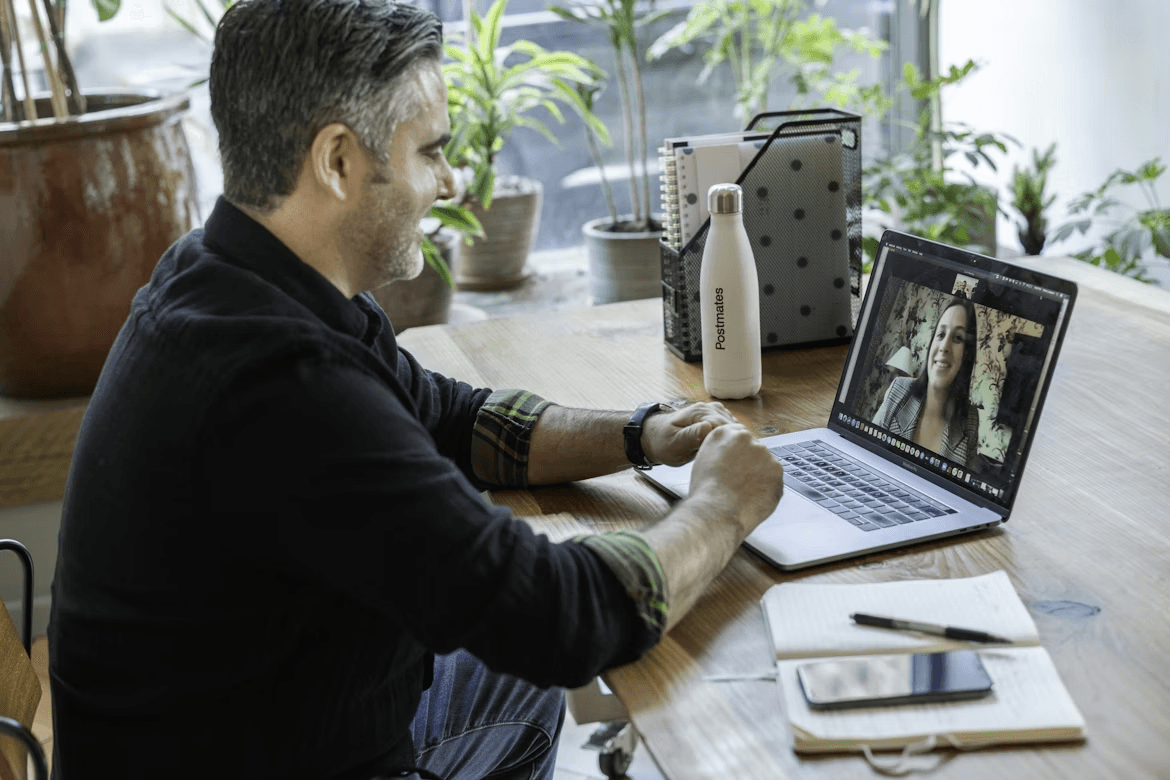
For many common mental health concerns, yes, online therapy is generally as effective as in-person therapy.

That includes concerns such as:

  • Anxiety

  • Depression

  • Stress, burnout, and work-related emotional overwhelm

  • Relationship difficulties

This conclusion is not based on trend pieces or platform marketing. It comes from years of research comparing outcomes across formats.

A major meta-analysis by Hannah Greenwood and colleagues, covering 12 randomized controlled trials with 931 patients, found no significant difference between online and face-to-face therapy in:

  • Symptom severity

  • Overall improvement

  • Daily functioning

  • Therapeutic alliance (the quality of the therapist-client relationship)

These results remained similar across follow-ups at 3, 6, and 12 months

Large real-world analyses support the same pattern. Ana Catarino and colleagues, studying more than 27,000 patients with anxiety and depression, found that online and in-person care produced broadly similar improvements in routine healthcare settings

That said, this is where nuance matters.

When people hear “equally effective”, they sometimes assume it means:

  • The experience feels exactly the same

  • Everyone should choose online therapy

  • Format never matters

  • Online therapy works for every situation equally well

None of those are accurate.

Online therapy and in-person therapy can feel different. Some people feel more comfortable opening up online. Others connect more easily in the room. Some concerns are very well suited to online work. Others may need closer observation, more structured support, or higher levels of care.

It also helps to understand what researchers mean by effective.

They usually mean:

  • Symptoms reduce over time

  • Functioning improves

  • Distress becomes more manageable

  • People stay in treatment long enough to benefit

They are not measuring whether sitting on a laptop feels identical to sitting in a therapist’s office.

So the most accurate version of the answer is this:

The research does not say online therapy is identical to in-person therapy. It says that for many common concerns, it can produce very similar clinical outcomes.

Which leads to the next and more interesting question:

What is it about online therapy that helps so many people stay engaged, open up, and actually benefit from it?

Why does online therapy work for so many people?
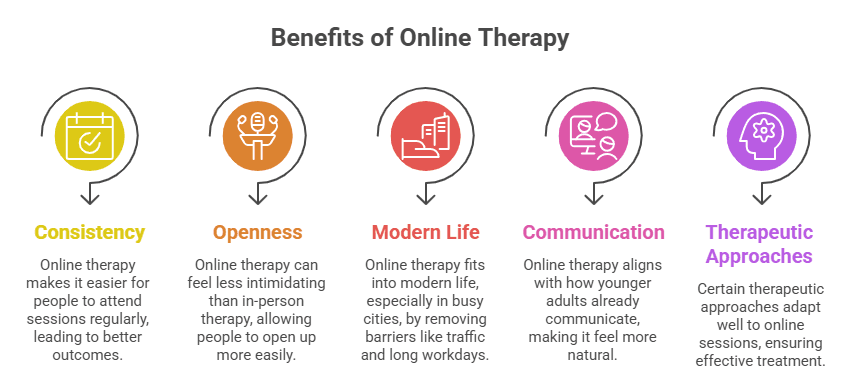
Online therapy often works for a surprisingly simple reason: It removes the barriers that stop therapy from working in the first place.

Many people do not miss out on progress because therapy is ineffective. They miss out because therapy becomes difficult to continue.

Life gets crowded.

Work meetings run late. Commutes eat up energy. Traffic turns one-hour sessions into three-hour commitments. Family obligations pile up. A missed appointment becomes two. Then therapy quietly fades away.

Online therapy can interrupt that pattern.

1. It makes consistency easier

Consistency matters more than most people realise.

Therapy is usually not a one-conversation fix. Change tends to happen through repeated sessions, reflection between sessions, and trust built over time.

Research found that patients in online therapy showed higher adherence than those in face-to-face and usual care groups, meaning they were more likely to continue treatment regularly

That makes practical sense.

When therapy is easier to attend, people are more likely to:

  • Show up regularly

  • Miss fewer sessions

  • Stay engaged long enough to see change

Sometimes the difference between “therapy didn’t help” and “therapy changed things” is simply whether someone was able to keep going.

2. It can feel easier to open up

For some people, therapy rooms feel safe.

For others, they feel intimidating.

Being in a formal office, sitting across from a stranger, and talking about painful parts of your life can heighten self-consciousness. Online sessions can soften that.

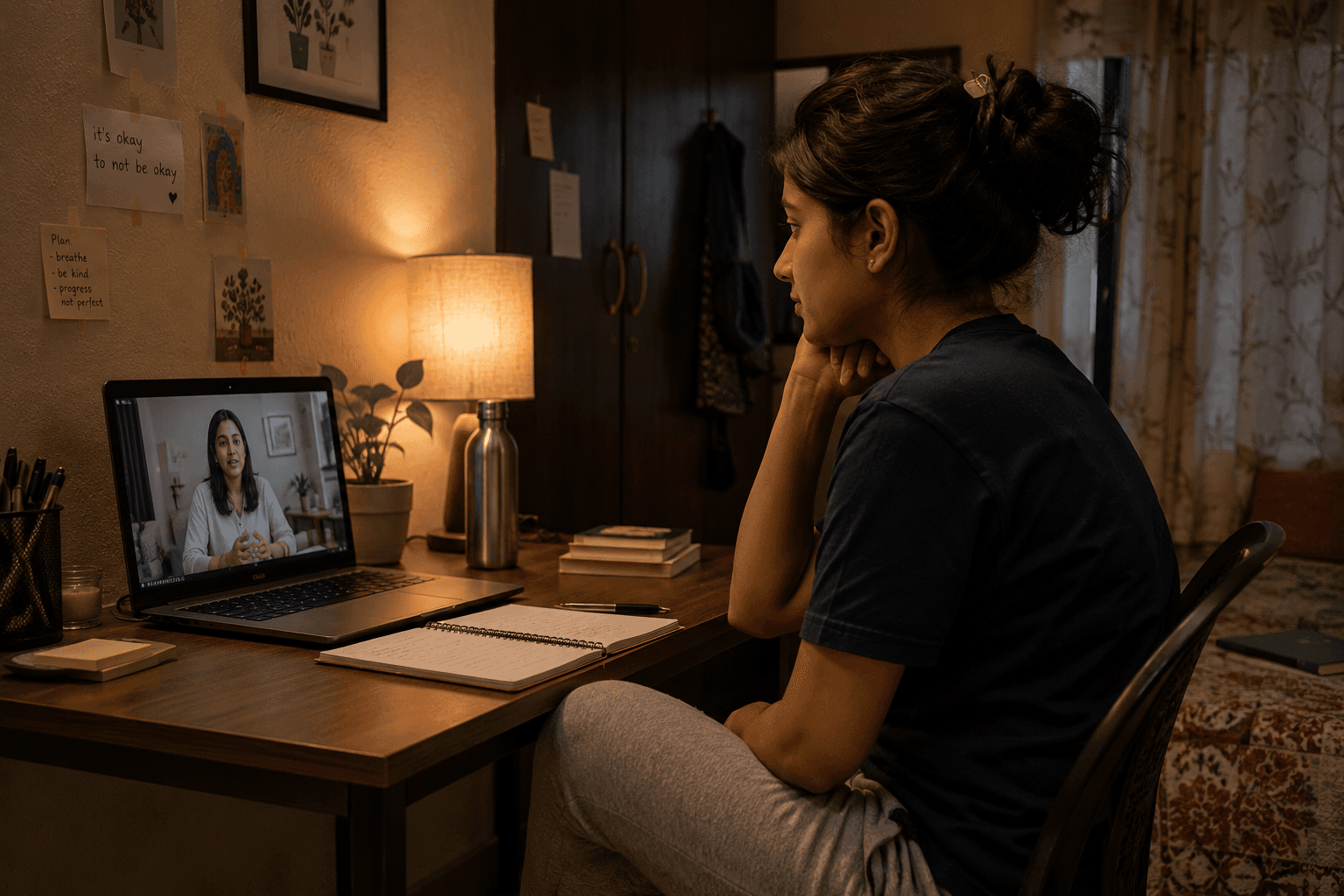
You are in familiar surroundings. You have your own water bottle, your own chair, your own room. That sense of control can matter.

In telepsychiatry research by Urness and Wass, around 93% of clients reported they could express themselves just as well online, with high satisfaction overall

Not everyone feels this way, but many do.

3. It fits modern life, especially in urban India

This is where context matters.

For many professionals in cities like Delhi, Mumbai, Bengaluru, Hyderabad, Pune, or Gurgaon, therapy has to compete with:

  • Long workdays

  • Unpredictable schedules

  • Heavy traffic

  • Limited time after work

  • Difficulty finding convenient appointment slots

There are also quieter barriers.

In some households, regularly stepping out invites questions. Not everyone feels comfortable saying they are going to therapy. Some fear judgement. Some fear being misunderstood. Some simply want privacy.

Online therapy removes much of this friction.

It allows people to:

  • Attend sessions from a private space

  • Schedule therapy around real life

  • Continue support while travelling or relocating

  • Seek help without turning it into a family conversation before they are ready

Research by Catarino et al. found that online delivery can reduce waiting times and improve access without reducing outcomes. (We talked about this particular research before too)

4. It aligns with how many younger adults already communicate

For many Gen Z and millennial adults, emotionally meaningful conversations already happen through screens.

They have built friendships on video calls, processed breakups over voice notes, stayed close to loved ones through distance, and had vulnerable conversations online for years.

So opening up online may not feel unnatural at all. In some cases, it may feel more natural than a formal clinical room.

That comfort can improve:

  • Engagement

  • Honesty

  • Retention over time

5. Some therapeutic approaches adapt especially well online

Certain evidence-based approaches translate smoothly to virtual sessions.

For example:

  • Cognitive Behavioural Therapy (CBT)

  • Acceptance and Commitment Therapy (ACT)

  • Skills-based anxiety treatment

  • Behavioural strategies for depression and stress

These approaches rely heavily on conversation, reflection, exercises, and real-world practice between sessions, all of which can work very effectively online.

The real advantage of online therapy

Online therapy often works not because it changes therapy itself, but because it makes therapy more sustainable.

It helps people keep showing up.

And that matters, because even the best therapy in the world cannot help much if life keeps getting in the way.

When does online therapy not work as well?
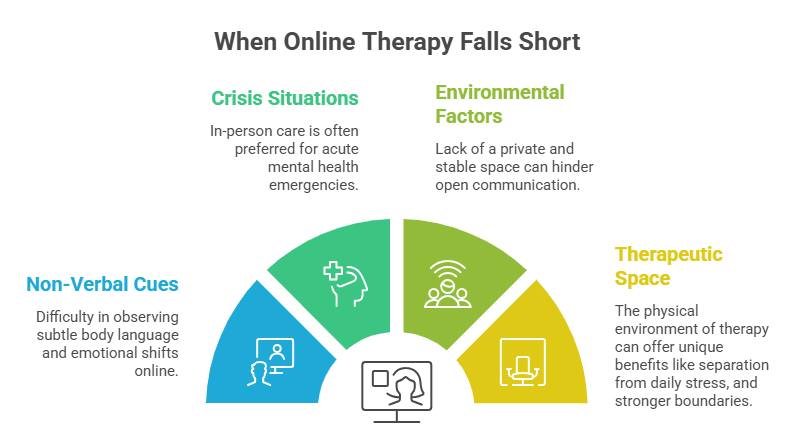
Online therapy can be highly effective, but it is not the right fit for every person or every situation.

That is not a weakness of online therapy. It is simply how mental healthcare works. Different concerns need different levels of support, structure, and responsiveness.

The most honest answer is this: Online therapy works well for many people, but there are situations where in-person care may be more helpful, safer, or clinically stronger.

Understanding those situations can help people make better decisions rather than idealistic ones.

1. When non-verbal cues matter more

Therapy is not only about words.

Therapists are also paying attention to:

  • Body language

  • Facial expressions

  • Changes in energy

  • Eye contact

  • Restlessness or slowed movement

  • Emotional shifts that happen between sentences

These cues can still be noticed online, especially over video, but sometimes they are easier to observe in person.

Research from Maria Moudatsou and colleagues notes that online formats can make it harder to pick up certain non-verbal signals in real time, particularly when video quality is poor or sessions are less stable

For many common concerns, this may not create a major problem.

But in some situations, those subtle observations matter.

2. In crisis or high-risk situations

If someone is dealing with:

  • Active suicidality

  • Acute self-harm risk

  • Psychosis

  • Severe instability

  • Rapid deterioration in functioning

In-person care is often preferred, or at least more intensive care is considered.

Why?

Because therapists may need to:

  • Assess risk more directly

  • Notice behaviour changes quickly

  • Coordinate emergency support

  • Respond faster when safety is a concern

Large clinical analyses like Catarino et al. distinguish between common anxiety and mood concerns, where online therapy performs strongly, and higher-risk or more complex situations where in-person or hybrid care may be more appropriate

This does not mean online therapy is unsafe.

It means that in certain cases, the format should match the level of care required.

3. When your environment is working against you

Online therapy depends on something in-person therapy provides automatically:

a usable private space

If someone is trying to attend therapy while:

  • Family members are nearby

  • A partner may overhear

  • Calls keep getting interrupted

  • Internet keeps dropping

  • They never feel fully alone

it becomes harder to be open.

This can matter for anyone, but especially for:

  • People in controlling relationships

  • Queer clients without safe family environments

  • Clients experiencing emotional or physical abuse

  • Anyone who cannot speak honestly at home

Studies such as Vizza et al. highlight how privacy and environmental stability can directly affect engagement and effectiveness in online care

4. When the therapy space itself matters

For some people, physically going to therapy has value in itself.

A dedicated clinical setting can create:

  • Separation from daily stress

  • Stronger emotional boundaries

  • A sense of being held in a safe space

  • Fewer distractions

  • Greater psychological commitment to the process

This can be especially helpful for people working through long-standing patterns, severe distress, or complex life situations.

Again, this does not mean online therapy is inferior.

It means that sometimes the room itself becomes part of the therapeutic experience.

The key takeaway

Online therapy does not need to be perfect to be effective.

But it also does not need to be forced into situations where another format may work better.

The more useful question is not: “Is online therapy good or bad?”

It is: What kind of support does this person need right now?

And that brings us to the factor that often matters more than format altogether.

Why does the therapeutic relationship matter more than the format?

The strongest predictor of whether therapy works is often not the format.

It is the therapeutic relationship between you and your therapist.

In simple terms, this means:

  • Do you feel safe with them?

  • Do you feel understood?

  • Can you be honest?

  • Do you trust the process enough to keep showing up?

Those questions often matter more than whether the session happens on a sofa or on Zoom.

What is the therapeutic relationship, really?

It is not about becoming friends with your therapist.

It is about building a working relationship strong enough to support difficult emotional work.

That usually includes:

  • Trust

  • Emotional safety

  • Respect

  • Feeling heard without being judged

  • Confidence that the therapist understands what matters to you

  • Enough challenge to grow, without feeling pushed too hard

Research consistently shows this relationship is one of the strongest predictors of improvement across therapy approaches.

And yes, it can happen online

Many people assume connection is weaker through a screen.

But research tells a more nuanced story.

The meta-analysis by Greenwood et al. found no significant difference in therapeutic alliance between online and in-person therapy

That means meaningful trust, rapport, and collaborative work can absolutely happen online.

Qualitative studies like Vizza et al. add something even more practical: many clients reported that the therapist mattered more than whether sessions were online or offline

What good therapist fit often feels like

People sometimes struggle to identify therapist fit because they expect dramatic certainty.

Usually, it feels simpler than that.

You may notice:

  • You do not have to over-explain yourself constantly

  • You feel calmer after sessions, even when discussing hard things

  • You can disagree or be honest without fear

  • Sessions feel natural rather than performative

  • You feel both supported and challenged

That fit can take time, but when it is present, therapy tends to move more effectively.

What this means in practice

A strong therapeutic relationship can make either format work well.

A poor fit can make both feel disappointing.

So if someone tried one online therapist and it did not help, the issue may not have been “online therapy.”

It may have been the relationship, the approach, the timing, or the match.

Which leads to the next real-world question:

How do you decide what is right for you?

So which one is actually right for you?

This is not about choosing the “better” option.

It is about choosing what fits your life, your needs, and the kind of support you need right now.

Most people do not need to make a perfect lifelong decision. They need a sensible starting point.
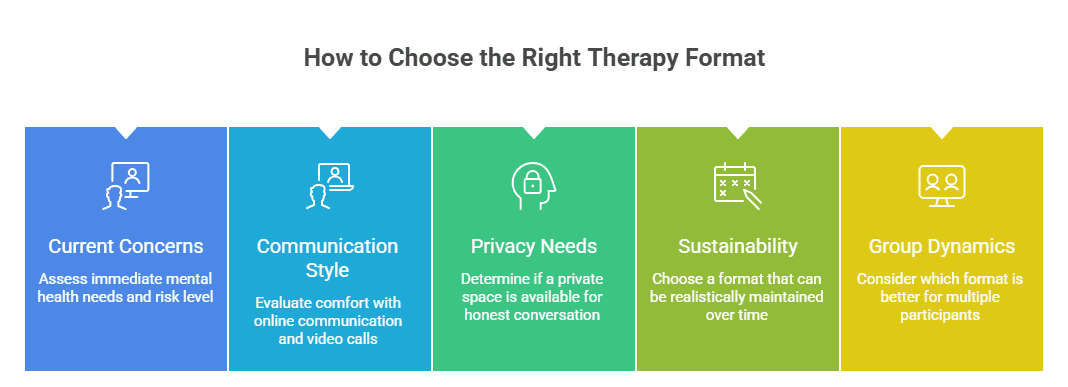
1. What are you dealing with right now?

For many concerns such as:

  • Anxiety

  • Stress

  • Burnout

  • Relationship issues

  • Low mood

  • Life transitions

online or in-person therapy can both work well.

But if someone is dealing with:

  • Active self-harm

  • Suicidal risk

  • Psychosis

  • Severe instability

  • Need for close observation

then in-person or higher-intensity care may be more appropriate.

This is less about “mild vs serious” labels and more about risk level and support needs.

2. How comfortable are you communicating online?

Some people feel freer online.

Others feel more connected face-to-face.

Neither response is wrong.

If video calls drain you, that matters. If online spaces help you open up, that matters too.

3. Do you have a private space where you can talk freely?

This is not just about convenience.

It can determine whether therapy can work at all.

For some clients, privacy is especially important, including:

  • Queer clients in unsupportive homes

  • People living with controlling family members

  • Clients experiencing intimate partner violence

  • Anyone who cannot speak honestly if overheard

If privacy is consistently impossible, in-person sessions may create more emotional safety.

4. Can you realistically stay consistent?

This question is underrated.

If one option sounds ideal but is difficult to sustain, it may not be the better option in practice.

The best therapy format is often the one you can actually continue.

5. Some concerns involve more than one person

In concerns such as addiction, relationship strain, or family conflict, involving others may sometimes help treatment.

This can absolutely happen online, but coordinating multiple people can occasionally be easier in person.

Patterns we often see

Online therapy often works especially well for:

  • Busy professionals

  • First-time therapy clients

  • People managing anxiety or stress

  • Those who value flexibility

  • People who travel frequently or relocate often

In-person therapy may be more helpful for:

  • High-risk situations

  • People needing closer monitoring

  • Those who feel emotionally disconnected online

  • Clients who need a stronger boundary from home life

You do not need to get this perfect on day one

Many people:

  • Start online

  • Switch later

  • Use a mix of both

  • Discover preferences through experience

A good therapist will help you adjust as you go.

For most people, the right first step matters more than the perfect first step.

Also Read:

What are people actually saying about online vs in-person therapy?

Research matters. Clinical outcomes matter. But people also want to know something simpler: What does this actually feel like for real people?

That is often the question underneath all the data.

When you look at community discussions, client reflections, and everyday conversations, a pattern emerges. People’s experiences are varied, but they are rarely random. They tend to mirror what the research already suggests:

Both formats can work. The difference is often about fit, not superiority.
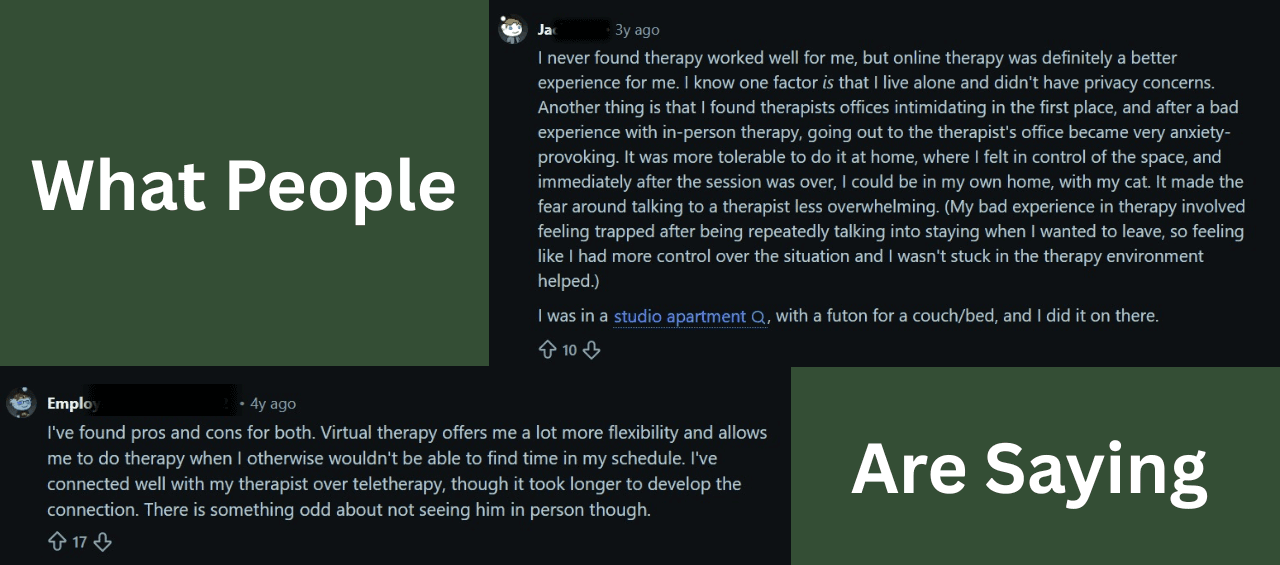
What these real experiences tell us

Most people are not debating formats in abstract terms.

They are asking questions like:

  • Can I keep doing this?

  • Will I feel comfortable enough to open up?

  • Will this fit into my week?

  • Will I feel supported?

That is often where the real decision lives.

And once we understand that, another modern question naturally follows:

If therapy can happen online, what about therapy apps and AI chatbots?

Are therapy apps or AI chatbots the same as therapy?

Short answer: No, they are not the same as therapy.

That does not mean they are useless. It means they serve a different role.

There has been a visible rise in mental health apps and AI-based emotional support tools, especially in India. Many are designed for busy professionals who want private, low-friction support that feels accessible and affordable.

For some people, these tools become the first step toward taking mental health seriously at all.

That matters.

What they can genuinely help with

Used well, apps and AI tools can support things like:

  • Mood tracking

  • Journaling prompts

  • Breathing exercises

  • Habit reminders

  • Psychoeducation

  • Reflection between therapy sessions

They can also lower the barrier to entry for someone who feels intimidated by therapy and is not ready to begin yet.

Sometimes an app is not the final answer. It is the first door someone is able to open.

Where therapy is different

Therapy is not just information or advice.

It is a relationship-based process guided by a trained professional who can understand nuance, patterns, contradictions, defenses, trauma responses, and emotional context in real time.

Therapy works through:

  • Human connection

  • Clinical judgement

  • Personalised intervention

  • Emotional attunement

  • Accountability over time

  • A safe space to explore what is difficult to say aloud

According to the American Psychiatric Association, psychotherapy leads to measurable improvement for a majority of people. That kind of change usually comes through sustained human work, not one-off tools

A more useful way to think about it

Instead of asking whether apps or AI can replace therapy, it may be more helpful to ask: Can this tool support me right now, and do I also need deeper human help?

Sometimes the answer is:

  • An app is enough for now

  • An app helps between therapy sessions

  • I need therapy, not just tools

  • I need both

That is a more mature and honest framework than replacement thinking.

And it brings us to the question many readers are quietly asking now:

What does all of this mean for me personally?

What this means for you

If you have been hesitating about therapy, especially online therapy, your hesitation makes sense.

You are not only asking:

Does this work?

You may also be asking:

  • Will I feel understood?

  • Will this actually help me feel better?

  • What if I choose wrong?

  • What if I open up and nothing changes?

  • What if I spend money and regret it?

Those are human questions. Not cynical ones.

And the research, taken as a whole, gives a reassuring but honest answer:

For many people, the format is not the main thing that determines whether therapy helps.

What tends to matter more is:

  • Whether you feel safe with the therapist

  • Whether you can be honest over time

  • Whether the approach fits your needs

  • Whether you stay with the process long enough to benefit

Online therapy often helps because it makes those conditions easier to maintain.

You do not need to choose perfectly

A lot of people delay therapy because they think they need certainty first.

The perfect therapist. The perfect format. The perfect moment. The guarantee it will work.

That certainty usually does not come beforehand.

It comes after starting.

Many people begin with one format, learn what they need, adjust over time, and build confidence through experience.

That is normal.

Where Elfina fits into this

Most people do not know exactly what kind of therapy they need when they begin.

They should not be expected to.

That is why the process matters.

At Elfina, the focus is not simply on booking a session. It is on helping people find a therapist who understands their context, communication style, goals, and concerns, so the fit is stronger from the beginning.

Because therapy is rarely about choosing online or in-person perfectly.

It is about finding support that feels possible to begin, safe enough to continue, and strong enough to create real change.

The final truth

You do not need to be “sure enough” to start.

You only need to be honest enough to take the next step.

FAQs: What people usually ask before starting online therapy

1) Is online therapy as effective as in-person therapy?

For many common concerns such as anxiety, depression, stress, burnout, and relationship difficulties, yes. Research consistently shows that online therapy can produce outcomes similar to in-person therapy for many people. The biggest factors are often therapist fit, consistency, and the quality of the therapeutic relationship, not the format alone.

2) Can online therapy help with serious mental health conditions?

Sometimes, yes, but it depends on the condition and level of risk.

Many people with significant distress, trauma, depression, or multiple concerns can still benefit from online therapy. But if someone is dealing with active suicidality, psychosis, severe instability, or needs close monitoring, in-person or higher-intensity care may be more appropriate. A good therapist will help assess this early.

3) What happens if I have a crisis during an online session?

Therapists who work online are trained to think about safety, risk planning, and emergency protocols. This often includes knowing your basic location, emergency contact details, and a plan for what happens if urgent support is needed.

But if someone is in immediate danger or severe crisis, emergency or in-person services are usually the right first step.

4) Is online therapy private and secure?

Reputable therapy platforms use secure systems designed to protect confidentiality. But privacy also depends on your environment.

For many people, the bigger issue is not platform security. It is whether they have a private place to speak freely at home. If privacy is difficult, headphones, white noise, or scheduling sessions from a safer space can help.

5) Can I switch from online to in-person therapy later?

Absolutely.

Many people begin online because it is easier to start, then later move to in-person sessions, or use a mix of both. Therapy does not have to be one fixed format. Your needs can change, and the format can change with them.

6) Is online therapy good for first-time therapy?

For many people, it can be an excellent first step.

Online therapy often feels more accessible, less intimidating, and easier to fit into real life. If the biggest barrier has been getting started at all, online sessions can lower that barrier significantly.

7) Who should not do online therapy?

There is rarely a strict “should not”, but online therapy may not be the best first option for people who are:

  • In immediate crisis

  • Actively suicidal without support

  • Experiencing psychosis or severe disorganisation

  • Unable to access a private space

  • Unable to engage meaningfully through remote sessions

In these cases, in-person or more intensive care may be safer and more effective.

References

[1] Greenwood, H., Krzyzaniak, N., Peiris, R., Clark, J., Scott, A. M., Cardona, M., Griffith, R., & Glasziou, P. (2022). Telehealth Versus Face-to-face Psychotherapy for Less Common Mental Health Conditions: Systematic Review and Meta-analysis of Randomized Controlled Trials. JMIR mental health, 9(3), e31780. https://doi.org/10.2196/31780 

[2] Catarino, A., Harper, S., Malcolm, R. et al. Economic evaluation of 27,540 patients with mood and anxiety disorders and the importance of waiting time and clinical effectiveness in mental healthcare. Nat. Mental Health 1, 667–678 (2023). https://doi.org/10.1038/s44220-023-00106-z

[3] Vizza, J., Riahi, S., Jackson, O., Potvin, C., & Rudoler, D. (2025). Therapy in the digital age: exploring in-person and virtual cognitive behavioural therapy. BMC psychiatry, 25(1), 615. https://doi.org/10.1186/s12888-025-07063-0

[4] Moudatsou, M., Stavropoulou, A., Rovithis, M., & Koukouli, S. (2024). Evaluation of Online Counseling through the Working Experiences of Mental Health Therapists Amidst the COVID-19 Pandemic. Healthcare (Basel, Switzerland), 12(4), 495. https://doi.org/10.3390/healthcare12040495

[5] Urness, D., Wass, M., Gordon, A., Tian, E., & Bulger, T. (2006). Client acceptability and quality of life--telepsychiatry compared to in-person consultation. Journal of telemedicine and telecare, 12(5), 251–254. https://doi.org/10.1258/135763306777889028

[6] Lippke, S., Gao, L., Keller, F. M., Becker, P., & Dahmen, A. (2021). Adherence With Online Therapy vs Face-to-Face Therapy and With Online Therapy vs Care as Usual: Secondary Analysis of Two Randomized Controlled Trials. Journal of medical Internet research, 23(11), e31274. https://doi.org/10.2196/31274

Is Online Therapy as Effective as In-Person? What Research Says

|

12

min read

|

Tanvi

The Ever-Evolving Cybersecurity Landscape

The hesitation most people don’t say out loud

A lot of people reach the edge of starting therapy before they actually begin.

They search for therapists late at night. Read profiles during lunch breaks. Save a few tabs. Maybe even choose a time slot.

And then they stop.

Not because they don’t care about their mental health. Not because they have decided they are “fine”. Usually, it comes down to one quiet question that many people never say out loud:

Will this actually work…especially if it’s online?

If you’ve had that thought, you are not overthinking. You are asking a reasonable question.

Therapy asks for something valuable from you. Time. Money. Emotional honesty. Hope. Most people do not want to invest all of that into something that feels uncertain.

And online therapy can feel even more uncertain.

There is a screen between you and the therapist. You may wonder whether it will feel awkward. Too clinical. Too distant. Too impersonal. You may wonder whether real trust can be built virtually, or whether meaningful conversations can happen in a room you are already stressed in.

For many people in India, this hesitation can feel even stronger.

Therapy is still a relatively new experience for a large number of people. Many did not grow up seeing parents, relatives, or colleagues talk openly about going to therapy. There is often no clear cultural reference point for what “good therapy” is supposed to feel like.

So when someone considers starting therapy, they are often navigating two unknowns at once:

  • What therapy itself will feel like

  • Whether online therapy is somehow “less real” than in-person support

That is why this article is not going to give you a simplistic answer.

This is not about declaring online therapy better than in-person therapy, or vice versa.

It is about answering the question that actually matters:

What helps, for whom, and under what conditions?

Because once we look at the research honestly, the conversation becomes much clearer.

So, is online therapy actually as effective as in-person therapy?

For many common mental health concerns, yes, online therapy is generally as effective as in-person therapy.

That includes concerns such as:

  • Anxiety

  • Depression

  • Stress, burnout, and work-related emotional overwhelm

  • Relationship difficulties

This conclusion is not based on trend pieces or platform marketing. It comes from years of research comparing outcomes across formats.

A major meta-analysis by Hannah Greenwood and colleagues, covering 12 randomized controlled trials with 931 patients, found no significant difference between online and face-to-face therapy in:

  • Symptom severity

  • Overall improvement

  • Daily functioning

  • Therapeutic alliance (the quality of the therapist-client relationship)

These results remained similar across follow-ups at 3, 6, and 12 months

Large real-world analyses support the same pattern. Ana Catarino and colleagues, studying more than 27,000 patients with anxiety and depression, found that online and in-person care produced broadly similar improvements in routine healthcare settings

That said, this is where nuance matters.

When people hear “equally effective”, they sometimes assume it means:

  • The experience feels exactly the same

  • Everyone should choose online therapy

  • Format never matters

  • Online therapy works for every situation equally well

None of those are accurate.

Online therapy and in-person therapy can feel different. Some people feel more comfortable opening up online. Others connect more easily in the room. Some concerns are very well suited to online work. Others may need closer observation, more structured support, or higher levels of care.

It also helps to understand what researchers mean by effective.

They usually mean:

  • Symptoms reduce over time

  • Functioning improves

  • Distress becomes more manageable

  • People stay in treatment long enough to benefit

They are not measuring whether sitting on a laptop feels identical to sitting in a therapist’s office.

So the most accurate version of the answer is this:

The research does not say online therapy is identical to in-person therapy. It says that for many common concerns, it can produce very similar clinical outcomes.

Which leads to the next and more interesting question:

What is it about online therapy that helps so many people stay engaged, open up, and actually benefit from it?

Why does online therapy work for so many people?

Online therapy often works for a surprisingly simple reason: It removes the barriers that stop therapy from working in the first place.

Many people do not miss out on progress because therapy is ineffective. They miss out because therapy becomes difficult to continue.

Life gets crowded.

Work meetings run late. Commutes eat up energy. Traffic turns one-hour sessions into three-hour commitments. Family obligations pile up. A missed appointment becomes two. Then therapy quietly fades away.

Online therapy can interrupt that pattern.

1. It makes consistency easier

Consistency matters more than most people realise.

Therapy is usually not a one-conversation fix. Change tends to happen through repeated sessions, reflection between sessions, and trust built over time.

Research found that patients in online therapy showed higher adherence than those in face-to-face and usual care groups, meaning they were more likely to continue treatment regularly

That makes practical sense.

When therapy is easier to attend, people are more likely to:

  • Show up regularly

  • Miss fewer sessions

  • Stay engaged long enough to see change

Sometimes the difference between “therapy didn’t help” and “therapy changed things” is simply whether someone was able to keep going.

2. It can feel easier to open up

For some people, therapy rooms feel safe.

For others, they feel intimidating.

Being in a formal office, sitting across from a stranger, and talking about painful parts of your life can heighten self-consciousness. Online sessions can soften that.

You are in familiar surroundings. You have your own water bottle, your own chair, your own room. That sense of control can matter.

In telepsychiatry research by Urness and Wass, around 93% of clients reported they could express themselves just as well online, with high satisfaction overall

Not everyone feels this way, but many do.

3. It fits modern life, especially in urban India

This is where context matters.

For many professionals in cities like Delhi, Mumbai, Bengaluru, Hyderabad, Pune, or Gurgaon, therapy has to compete with:

  • Long workdays

  • Unpredictable schedules

  • Heavy traffic

  • Limited time after work

  • Difficulty finding convenient appointment slots

There are also quieter barriers.

In some households, regularly stepping out invites questions. Not everyone feels comfortable saying they are going to therapy. Some fear judgement. Some fear being misunderstood. Some simply want privacy.

Online therapy removes much of this friction.

It allows people to:

  • Attend sessions from a private space

  • Schedule therapy around real life

  • Continue support while travelling or relocating

  • Seek help without turning it into a family conversation before they are ready

Research by Catarino et al. found that online delivery can reduce waiting times and improve access without reducing outcomes. (We talked about this particular research before too)

4. It aligns with how many younger adults already communicate

For many Gen Z and millennial adults, emotionally meaningful conversations already happen through screens.

They have built friendships on video calls, processed breakups over voice notes, stayed close to loved ones through distance, and had vulnerable conversations online for years.

So opening up online may not feel unnatural at all. In some cases, it may feel more natural than a formal clinical room.

That comfort can improve:

  • Engagement

  • Honesty

  • Retention over time

5. Some therapeutic approaches adapt especially well online

Certain evidence-based approaches translate smoothly to virtual sessions.

For example:

  • Cognitive Behavioural Therapy (CBT)

  • Acceptance and Commitment Therapy (ACT)

  • Skills-based anxiety treatment

  • Behavioural strategies for depression and stress

These approaches rely heavily on conversation, reflection, exercises, and real-world practice between sessions, all of which can work very effectively online.

The real advantage of online therapy

Online therapy often works not because it changes therapy itself, but because it makes therapy more sustainable.

It helps people keep showing up.

And that matters, because even the best therapy in the world cannot help much if life keeps getting in the way.

When does online therapy not work as well?

Online therapy can be highly effective, but it is not the right fit for every person or every situation.

That is not a weakness of online therapy. It is simply how mental healthcare works. Different concerns need different levels of support, structure, and responsiveness.

The most honest answer is this: Online therapy works well for many people, but there are situations where in-person care may be more helpful, safer, or clinically stronger.

Understanding those situations can help people make better decisions rather than idealistic ones.

1. When non-verbal cues matter more

Therapy is not only about words.

Therapists are also paying attention to:

  • Body language

  • Facial expressions

  • Changes in energy

  • Eye contact

  • Restlessness or slowed movement

  • Emotional shifts that happen between sentences

These cues can still be noticed online, especially over video, but sometimes they are easier to observe in person.

Research from Maria Moudatsou and colleagues notes that online formats can make it harder to pick up certain non-verbal signals in real time, particularly when video quality is poor or sessions are less stable

For many common concerns, this may not create a major problem.

But in some situations, those subtle observations matter.

2. In crisis or high-risk situations

If someone is dealing with:

  • Active suicidality

  • Acute self-harm risk

  • Psychosis

  • Severe instability

  • Rapid deterioration in functioning

In-person care is often preferred, or at least more intensive care is considered.

Why?

Because therapists may need to:

  • Assess risk more directly

  • Notice behaviour changes quickly

  • Coordinate emergency support

  • Respond faster when safety is a concern

Large clinical analyses like Catarino et al. distinguish between common anxiety and mood concerns, where online therapy performs strongly, and higher-risk or more complex situations where in-person or hybrid care may be more appropriate

This does not mean online therapy is unsafe.

It means that in certain cases, the format should match the level of care required.

3. When your environment is working against you

Online therapy depends on something in-person therapy provides automatically:

a usable private space

If someone is trying to attend therapy while:

  • Family members are nearby

  • A partner may overhear

  • Calls keep getting interrupted

  • Internet keeps dropping

  • They never feel fully alone

it becomes harder to be open.

This can matter for anyone, but especially for:

  • People in controlling relationships

  • Queer clients without safe family environments

  • Clients experiencing emotional or physical abuse

  • Anyone who cannot speak honestly at home

Studies such as Vizza et al. highlight how privacy and environmental stability can directly affect engagement and effectiveness in online care

4. When the therapy space itself matters

For some people, physically going to therapy has value in itself.

A dedicated clinical setting can create:

  • Separation from daily stress

  • Stronger emotional boundaries

  • A sense of being held in a safe space

  • Fewer distractions

  • Greater psychological commitment to the process

This can be especially helpful for people working through long-standing patterns, severe distress, or complex life situations.

Again, this does not mean online therapy is inferior.

It means that sometimes the room itself becomes part of the therapeutic experience.

The key takeaway

Online therapy does not need to be perfect to be effective.

But it also does not need to be forced into situations where another format may work better.

The more useful question is not: “Is online therapy good or bad?”

It is: What kind of support does this person need right now?

And that brings us to the factor that often matters more than format altogether.

Why does the therapeutic relationship matter more than the format?

The strongest predictor of whether therapy works is often not the format.

It is the therapeutic relationship between you and your therapist.

In simple terms, this means:

  • Do you feel safe with them?

  • Do you feel understood?

  • Can you be honest?

  • Do you trust the process enough to keep showing up?

Those questions often matter more than whether the session happens on a sofa or on Zoom.

What is the therapeutic relationship, really?

It is not about becoming friends with your therapist.

It is about building a working relationship strong enough to support difficult emotional work.

That usually includes:

  • Trust

  • Emotional safety

  • Respect

  • Feeling heard without being judged

  • Confidence that the therapist understands what matters to you

  • Enough challenge to grow, without feeling pushed too hard

Research consistently shows this relationship is one of the strongest predictors of improvement across therapy approaches.

And yes, it can happen online

Many people assume connection is weaker through a screen.

But research tells a more nuanced story.

The meta-analysis by Greenwood et al. found no significant difference in therapeutic alliance between online and in-person therapy

That means meaningful trust, rapport, and collaborative work can absolutely happen online.

Qualitative studies like Vizza et al. add something even more practical: many clients reported that the therapist mattered more than whether sessions were online or offline

What good therapist fit often feels like

People sometimes struggle to identify therapist fit because they expect dramatic certainty.

Usually, it feels simpler than that.

You may notice:

  • You do not have to over-explain yourself constantly

  • You feel calmer after sessions, even when discussing hard things

  • You can disagree or be honest without fear

  • Sessions feel natural rather than performative

  • You feel both supported and challenged

That fit can take time, but when it is present, therapy tends to move more effectively.

What this means in practice

A strong therapeutic relationship can make either format work well.

A poor fit can make both feel disappointing.

So if someone tried one online therapist and it did not help, the issue may not have been “online therapy.”

It may have been the relationship, the approach, the timing, or the match.

Which leads to the next real-world question:

How do you decide what is right for you?

So which one is actually right for you?

This is not about choosing the “better” option.

It is about choosing what fits your life, your needs, and the kind of support you need right now.

Most people do not need to make a perfect lifelong decision. They need a sensible starting point.

1. What are you dealing with right now?

For many concerns such as:

  • Anxiety

  • Stress

  • Burnout

  • Relationship issues

  • Low mood

  • Life transitions

online or in-person therapy can both work well.

But if someone is dealing with:

  • Active self-harm

  • Suicidal risk

  • Psychosis

  • Severe instability

  • Need for close observation

then in-person or higher-intensity care may be more appropriate.

This is less about “mild vs serious” labels and more about risk level and support needs.

2. How comfortable are you communicating online?

Some people feel freer online.

Others feel more connected face-to-face.

Neither response is wrong.

If video calls drain you, that matters. If online spaces help you open up, that matters too.

3. Do you have a private space where you can talk freely?

This is not just about convenience.

It can determine whether therapy can work at all.

For some clients, privacy is especially important, including:

  • Queer clients in unsupportive homes

  • People living with controlling family members

  • Clients experiencing intimate partner violence

  • Anyone who cannot speak honestly if overheard

If privacy is consistently impossible, in-person sessions may create more emotional safety.

4. Can you realistically stay consistent?

This question is underrated.

If one option sounds ideal but is difficult to sustain, it may not be the better option in practice.

The best therapy format is often the one you can actually continue.

5. Some concerns involve more than one person

In concerns such as addiction, relationship strain, or family conflict, involving others may sometimes help treatment.

This can absolutely happen online, but coordinating multiple people can occasionally be easier in person.

Patterns we often see

Online therapy often works especially well for:

  • Busy professionals

  • First-time therapy clients

  • People managing anxiety or stress

  • Those who value flexibility

  • People who travel frequently or relocate often

In-person therapy may be more helpful for:

  • High-risk situations

  • People needing closer monitoring

  • Those who feel emotionally disconnected online

  • Clients who need a stronger boundary from home life

You do not need to get this perfect on day one

Many people:

  • Start online

  • Switch later

  • Use a mix of both

  • Discover preferences through experience

A good therapist will help you adjust as you go.

For most people, the right first step matters more than the perfect first step.

Also Read:

What are people actually saying about online vs in-person therapy?

Research matters. Clinical outcomes matter. But people also want to know something simpler: What does this actually feel like for real people?

That is often the question underneath all the data.

When you look at community discussions, client reflections, and everyday conversations, a pattern emerges. People’s experiences are varied, but they are rarely random. They tend to mirror what the research already suggests:

Both formats can work. The difference is often about fit, not superiority.
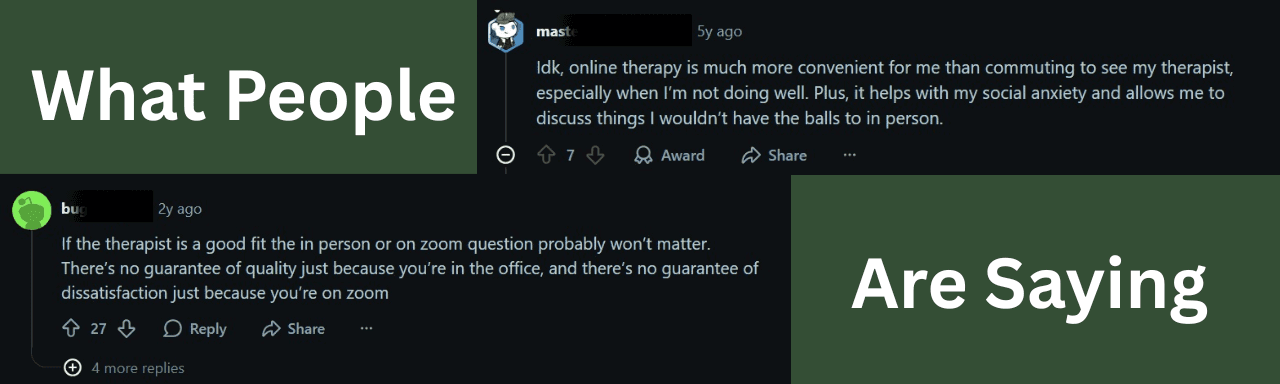
What these real experiences tell us

Most people are not debating formats in abstract terms.

They are asking questions like:

  • Can I keep doing this?

  • Will I feel comfortable enough to open up?

  • Will this fit into my week?

  • Will I feel supported?

That is often where the real decision lives.

And once we understand that, another modern question naturally follows:

If therapy can happen online, what about therapy apps and AI chatbots?

Are therapy apps or AI chatbots the same as therapy?

Short answer: No, they are not the same as therapy.

That does not mean they are useless. It means they serve a different role.

There has been a visible rise in mental health apps and AI-based emotional support tools, especially in India. Many are designed for busy professionals who want private, low-friction support that feels accessible and affordable.

For some people, these tools become the first step toward taking mental health seriously at all.

That matters.

What they can genuinely help with

Used well, apps and AI tools can support things like:

  • Mood tracking

  • Journaling prompts

  • Breathing exercises

  • Habit reminders

  • Psychoeducation

  • Reflection between therapy sessions

They can also lower the barrier to entry for someone who feels intimidated by therapy and is not ready to begin yet.

Sometimes an app is not the final answer. It is the first door someone is able to open.

Where therapy is different

Therapy is not just information or advice.

It is a relationship-based process guided by a trained professional who can understand nuance, patterns, contradictions, defenses, trauma responses, and emotional context in real time.

Therapy works through:

  • Human connection

  • Clinical judgement

  • Personalised intervention

  • Emotional attunement

  • Accountability over time

  • A safe space to explore what is difficult to say aloud

According to the American Psychiatric Association, psychotherapy leads to measurable improvement for a majority of people. That kind of change usually comes through sustained human work, not one-off tools

A more useful way to think about it

Instead of asking whether apps or AI can replace therapy, it may be more helpful to ask: Can this tool support me right now, and do I also need deeper human help?

Sometimes the answer is:

  • An app is enough for now

  • An app helps between therapy sessions

  • I need therapy, not just tools

  • I need both

That is a more mature and honest framework than replacement thinking.

And it brings us to the question many readers are quietly asking now:

What does all of this mean for me personally?

What this means for you

If you have been hesitating about therapy, especially online therapy, your hesitation makes sense.

You are not only asking:

Does this work?

You may also be asking:

  • Will I feel understood?

  • Will this actually help me feel better?

  • What if I choose wrong?

  • What if I open up and nothing changes?

  • What if I spend money and regret it?

Those are human questions. Not cynical ones.

And the research, taken as a whole, gives a reassuring but honest answer:

For many people, the format is not the main thing that determines whether therapy helps.

What tends to matter more is:

  • Whether you feel safe with the therapist

  • Whether you can be honest over time

  • Whether the approach fits your needs

  • Whether you stay with the process long enough to benefit

Online therapy often helps because it makes those conditions easier to maintain.

You do not need to choose perfectly

A lot of people delay therapy because they think they need certainty first.

The perfect therapist. The perfect format. The perfect moment. The guarantee it will work.

That certainty usually does not come beforehand.

It comes after starting.

Many people begin with one format, learn what they need, adjust over time, and build confidence through experience.

That is normal.

Where Elfina fits into this

Most people do not know exactly what kind of therapy they need when they begin.

They should not be expected to.

That is why the process matters.

At Elfina, the focus is not simply on booking a session. It is on helping people find a therapist who understands their context, communication style, goals, and concerns, so the fit is stronger from the beginning.

Because therapy is rarely about choosing online or in-person perfectly.

It is about finding support that feels possible to begin, safe enough to continue, and strong enough to create real change.

The final truth

You do not need to be “sure enough” to start.

You only need to be honest enough to take the next step.

FAQs: What people usually ask before starting online therapy

1) Is online therapy as effective as in-person therapy?

For many common concerns such as anxiety, depression, stress, burnout, and relationship difficulties, yes. Research consistently shows that online therapy can produce outcomes similar to in-person therapy for many people. The biggest factors are often therapist fit, consistency, and the quality of the therapeutic relationship, not the format alone.

2) Can online therapy help with serious mental health conditions?

Sometimes, yes, but it depends on the condition and level of risk.

Many people with significant distress, trauma, depression, or multiple concerns can still benefit from online therapy. But if someone is dealing with active suicidality, psychosis, severe instability, or needs close monitoring, in-person or higher-intensity care may be more appropriate. A good therapist will help assess this early.

3) What happens if I have a crisis during an online session?

Therapists who work online are trained to think about safety, risk planning, and emergency protocols. This often includes knowing your basic location, emergency contact details, and a plan for what happens if urgent support is needed.

But if someone is in immediate danger or severe crisis, emergency or in-person services are usually the right first step.

4) Is online therapy private and secure?

Reputable therapy platforms use secure systems designed to protect confidentiality. But privacy also depends on your environment.

For many people, the bigger issue is not platform security. It is whether they have a private place to speak freely at home. If privacy is difficult, headphones, white noise, or scheduling sessions from a safer space can help.

5) Can I switch from online to in-person therapy later?

Absolutely.

Many people begin online because it is easier to start, then later move to in-person sessions, or use a mix of both. Therapy does not have to be one fixed format. Your needs can change, and the format can change with them.

6) Is online therapy good for first-time therapy?

For many people, it can be an excellent first step.

Online therapy often feels more accessible, less intimidating, and easier to fit into real life. If the biggest barrier has been getting started at all, online sessions can lower that barrier significantly.

7) Who should not do online therapy?

There is rarely a strict “should not”, but online therapy may not be the best first option for people who are:

  • In immediate crisis

  • Actively suicidal without support

  • Experiencing psychosis or severe disorganisation

  • Unable to access a private space

  • Unable to engage meaningfully through remote sessions

In these cases, in-person or more intensive care may be safer and more effective.

References

[1] Greenwood, H., Krzyzaniak, N., Peiris, R., Clark, J., Scott, A. M., Cardona, M., Griffith, R., & Glasziou, P. (2022). Telehealth Versus Face-to-face Psychotherapy for Less Common Mental Health Conditions: Systematic Review and Meta-analysis of Randomized Controlled Trials. JMIR mental health, 9(3), e31780. https://doi.org/10.2196/31780 

[2] Catarino, A., Harper, S., Malcolm, R. et al. Economic evaluation of 27,540 patients with mood and anxiety disorders and the importance of waiting time and clinical effectiveness in mental healthcare. Nat. Mental Health 1, 667–678 (2023). https://doi.org/10.1038/s44220-023-00106-z

[3] Vizza, J., Riahi, S., Jackson, O., Potvin, C., & Rudoler, D. (2025). Therapy in the digital age: exploring in-person and virtual cognitive behavioural therapy. BMC psychiatry, 25(1), 615. https://doi.org/10.1186/s12888-025-07063-0

[4] Moudatsou, M., Stavropoulou, A., Rovithis, M., & Koukouli, S. (2024). Evaluation of Online Counseling through the Working Experiences of Mental Health Therapists Amidst the COVID-19 Pandemic. Healthcare (Basel, Switzerland), 12(4), 495. https://doi.org/10.3390/healthcare12040495

[5] Urness, D., Wass, M., Gordon, A., Tian, E., & Bulger, T. (2006). Client acceptability and quality of life--telepsychiatry compared to in-person consultation. Journal of telemedicine and telecare, 12(5), 251–254. https://doi.org/10.1258/135763306777889028

[6] Lippke, S., Gao, L., Keller, F. M., Becker, P., & Dahmen, A. (2021). Adherence With Online Therapy vs Face-to-Face Therapy and With Online Therapy vs Care as Usual: Secondary Analysis of Two Randomized Controlled Trials. Journal of medical Internet research, 23(11), e31274. https://doi.org/10.2196/31274

Frequently Asked Questions

What types of therapy do you offer?
Can I meet my therapist in-person?
How do you match me with a therapist?
How much does therapy cost?
Do you offer free trials?

Finding The Right Fit, Made Easy

© Mindaro Health Technologies. All rights reserved

© Mindaro Health Technologies. All rights reserved

Finding the right fit, made easy.

FAQs

What types of therapy do you offer?

Can I meet my therapist in-person?

How do you match me with a therapist?

How much does therapy cost?

Do you offer free trials?